Military Emissions in Peace and War – Pushing it up the UN’s Climate Agenda

Military Emissions in Peace and War – Pushing it up the UN’s Climate Agenda

Military emissions in peacetime and war  getting this onto the UNFCCC agenda

Dear friends, colleagues and supporters,

The TV pictures of Russia’s invasion of Ukraine – tanks, jets, missiles and smashed up infrastructure – has meant that the world is now, finally and belatedly, looking at war and conflict through the climate change lens. It is doing so in a way it never did for Afghanistan or Iraq or Syria or any other conflict in recent times.

World leaders will have to finally deal with the climate impact of conflict as they head into the G7 summit in Germany.

To coincide with the G7 Summit in Germany 26-28 June, a new technical report with a companion advocacy briefing, commissioned by Tipping Point North South and written by Perspectives Climate Group (Germany), explores the military emissions ‘reporting gap’, both in peacetime and war. Military and conflict-related emissions: Kyoto to Glasgow and beyond offers a much needed robust set of proposals to address this within the UN Framework Convention on Climate Change (UNFCCC).

The report is covered here in Deutsche Welle, published today. Continue reading

Sharing some more links – film event; Palestine COVID appeal; our future work

Sharing some more links – film event; Palestine COVID appeal; our future work

Dear friends and supporters,

A brief mini-update below on some of the issues we continue to work on with a few links we hope may be of interest.

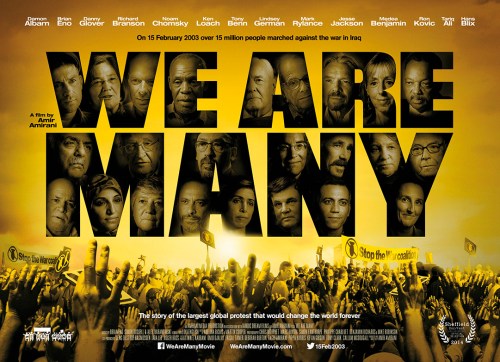
WE ARE MANY FILM April 8th 


We’re excited to share news about Stop the War’s Mass Viewing of We Are Many and Q&A with director Amir Amirani on Wednesday 8 April.Stop the War are giving 5 days to try and watch this acclaimed film about the global anti-Iraq war movement, after which they will host a Q&A with Amir and two special guests, via Zoom.

You can watch the film here:
iTunes – https://itunes.apple.com/gb/movie/we-are-many/id1118498978
Amazon – https://www.amazon.co.uk/We-Are-Many-Damon-Albarn/dp/B01IFW0WX4

Other outlets are also available and if you’ve seen it before or would just like to tune in anyway you can join in on Zoom from 7pm on April 8th. Register here
https://zoom.us/webinar/register/WN_Zv-2463wSxCd77PZ1juvzw
Continue reading

In times of Coronavirus: UBI is an idea whose time has finally come

In times of Coronavirus: UBI is an idea whose time has finally come

The solution to poverty is to abolish it directly by a now widely discussed measure: the guaranteed income. … We are likely to find that the problems of housing and education, instead of preceding the elimination of poverty, will themselves be affected if poverty is first abolished.

Martin Luther King Jr., Where Do We Go From Here: Chaos or Community? (1968)

We hope this email finds you, and all those you care for, safe and well.

Many of us also have family, friends and colleagues in many different parts of the world and, coupled with the ever rising number of cases here in the UK/Europe/USA, the news about the spread of Coronavirus (COVID-19) across the global south, for many of us, will be even more worrying.

It is becoming more apparent with every passing day that the Coronavirus pandemic is holding a mirror up to every single aspect of human life and activity and that this scrutiny leaves much of humanity’s 21st century day to day behaviour sorely wanting. The ultimate damning evidence of this is the millions upon millions of our fellow sisters and brothers in the global south who don’t even have access to the basic protective shield of soap and water as this pandemic rages across the globe.

It’s not as if we didn’t know the system was long broken. We did. The evidence has been piling up for years and years. However, global inequality and the unstoppable ascendency of the tax evading greedy 1%; the harm of agribusiness and factory farming at one end and illegal poaching at the other; big pharma’s monopolies and the erosion of the primacy of publicly funded healthcare and research; and finally, ultimately, climate catastrophe; none of this was enough to force the hands of the political class, financial and corporate sectors to change course and ‘do the right thing’.
Continue reading

We Are Many

We Are Many

Amir Amirani’s film We Are Many was in the research and making for more than nine years. Addressing the illegality of the invasion of Iraq and the subsequent undermining of democratic processes, it sets alongside the power of public protest and mass mobilisations of the anti-Iraq war movement – a movement that was to inspire the Egyptian uprising of 2011; a movement of more than 15 million people, in 800 cities, in 70 countries who marched to protest the imminent invasion of Iraq; a movement which shaped a generation.

Tipping Point Film Fund was the film’s first funder in late 2010 and was an executive producing partner throughout. It was a lead partner on a Kick-starter campaign that raised $92k for the production costs and worked with Amir across fundraising, production, editing, and release in UK cinemas in 2016, as well as the film’s outreach on related peace issues.  Find out more here.

WE ARE MANY is available on iTunes and Google Play.

Continue reading

£280bn Global Arms Sales in 2016

Global sales of weapons and military services have risen for the first time in five years, helped in part by an increase in sales by British companies.

Weapons – many of which are fuelling deadly conflicts in the Middle East – are now being bought and sold at the highest level since 2010, with sales up more than a third (38 per cent) since 2002.

Military kit worth $374.8bn (£280bn) was sold in 2016 by the industry’s top 100 companies, an annual review by the Stockholm International Peace Research Institute (Sipri) found.

The findings came as UK firm BAE Systems signed a $6.7bn deal with Qatar to buy 24 Typhoon fighter jets.

British arms sales rose 2 per cent last year and now amount to almost 10 per cent of global sales, researchers found.

Germany’s arms sales jumped 6.6 per cent while South Korean companies notched up 20 per cent more sales than a year earlier. …

Sales by Lockheed Martin – the world’s largest arms producer – rose by 10.7 per cent in 2016, the report found, linked to the sale of F-35 combat aircraft. Continue reading

Jeremy Corbyn’s Geneva speech in full

Speaking at the United Nation’s Geneva headquarters today, Jeremy Corbyn MP, Leader of the Labour Party, said:

Thank you Paul for that introduction. And let me give a special thanks to the United Nations Research Institute for Social Development. Your work gives an important platform to marginalised voices for social justice to challenge policy makers and campaign for change.

I welcome pressure both on my party the British Labour Party and on my leadership to put social justice front and centre stage in everything we do. So thank you for inviting me to speak here in this historic setting at the Palais des Nations in Geneva a city that has been a place of refuge and philosophy since the time of Rousseau. The headquarters before the Second World War of the ill-fated League of Nations, which now houses the United Nations.

It’s a particular privilege to be speaking here because the constitution of our party includes a commitment to support the United Nations. A promise “to secure peace, freedom, democracy, economic security and environmental protection for all”.

I’d also like to thank my fellow panellists, Arancha Gonzalez and Nikhil Seth, and Labour’s Shadow Attorney General, Shami Chakrabarti, who has accompanied me here. She has been a remarkable campaigner and a great asset to the international movement for human rights.

And lastly let me thank you all for being here today.

I would like to use this opportunity in the run- up to International Human Rights Day to focus on the greatest threats to our common humanity. And why states need to throw their weight behind genuine international co-operation and human rights both individual and collective, social and economic, as well as legal and constitutional at home and abroad if we are to meet and overcome those threats.
Continue reading

New report on securitisation of aid

  • Syria case may be ‘tip of the iceberg’ for fund backing some of world’s worst security forces
  • Secretive Conflict, Stability and Security Fund uses £500m of aid money
  • Government accused of using loophole to fund discredited consultancy

The controversial cross-government fund behind the British aid project in Syria which has today been suspended amid claims that money was reaching jihadist groups should be shut down, according to campaign group Global Justice Now, which has released a new report on the fund.

The report lifts the lid on one of the British government’s most secretive funds, which is behind military and security projects in around 70 countries including Bahrain, Egypt, Sudan, Ethiopia, Iraq and Nigeria. The billion-pound pot, known as the Conflict, Stability and Security Fund, spends over £500 million of British aid and is overseen by the National Security Council, chaired by the Prime Minister. Neither the public nor MPs are able to properly scrutinise the fund due to a serious lack of transparency, the report finds.
Continue reading

Interactive Map: European weapons and Refugees

Valuable resource from Centre Delàs:

Interactive map « European weapons and refugees »

The purpose of this interactive map is to highlight the link between European arms export and flows of refugees and internally displaced persons, in order to determine whether there is any direct or indirect responsibility of EU Member States for situations of insecurity and violence that drive millions of people to flee their homes every year.

A second objective of this tool is to stress their (ir)responsibility in European arms export authorization or realization as well as their inadequate compliance of the existing legislation, established by the Common Position 2008/944/CFSP of December 8, 2008, which sets up 22 weapons categories including ammunition, light weapons, aircraft and warships, military transport vehicles and all types of military technology for military purposes. On the basis of the criteria set out in the Common Position, the relationship between the European legislation on arms export and situations of insecurity leading to movements of refugees and displaced persons can be established.

http://www.centredelas.org/en/database/arms-trade/interactive-map-arms-trade-and-refugees

More than 100 F-35s in service can’t fight

The U.S. military has signaled that it might cancel essential upgrades for more than 100 early model F-35 stealth fighters flown by the Air Force, rendering the radar-evading jets incompatible with many of the latest weapons.

In that case, some 6 percent of the flying branch’s planned 1,700-strong F-35 fleet would be unfit for combat, sticking U.S. taxpayers with a $20 billion tab for fighters… that can’t fight. Continue reading

The Pentagon’s use of private contractors adds to a legacy of environmental damage

The military is one of the country’s largest polluters, with an inventory of toxic sites on American soil that once topped 39,000. At many locations, the Pentagon has relied on contractors like U.S. Technology to assist in cleaning and restoring land, removing waste, clearing unexploded bombs, and decontaminating buildings, streams and soil. In addition to its work for Barksdale, U.S. Technology had won some 830 contracts with other military facilities — Army, Air Force, Navy and logistics bases — totaling more than $49 million, many of them to dispose of similar powders. Continue reading

UK arms firms pay little tax in Saudi arms sale

The report, released by children’s charity War Child, claims that corporations, including BAE systems and Raytheon, have made an estimated $775m in profit on $8bn worth of revenue by selling arms to Saudi Arabia between March 2015 and the end of 2016.

Yet corporation tax receipts since the war in Yemen began stands at just $40m, something the NGO describes as “pitiful”.
Continue reading

Israel arms Myanmar military amid crackdown on Rohingya

Israel has continued to sell arms to Myanmar, despite international condemnation of the country’s crackdown on its Rohingya Muslim minority. …

The armaments sold to Myanmar include over 100 tanks, weapons and boats that have been used to police the country’s border and perpetrate numerous acts of violence against the Rohingya, such that the UN suspects the army is committing ethnic cleansing. Continue reading

Wonder Woman and the Military-Industrial Complex

In short, this is straight-up propaganda for the military-industrial complex. It would have looked and sounded identical had it been scripted by a joint team from the Pentagon and the Israel Defense Forces.

My reticence to review the film has lifted after reading the latest investigations of Tom Secker and Matthew Alford into the manifold ways the U.S. military and security services interfere in Hollywood, based on a release of 4,000 pages of documents under Freedom of Information requests.

In their new book “National Security Cinema,” the pair argue that the Pentagon, CIA and National Security Agency have meddled in the production of at least 800 major Hollywood movies and 1,000 TV titles. That is likely to be only the tip of the iceberg, as they concede:

“It is impossible to know exactly how widespread this military censorship of entertainment is because many files are still being withheld.” Continue reading

Military tourism in Israel

It was only a matter of time before local entrepreneurs figured out they could channel Israel’s vast experience in war and counterterrorism in this direction. Today, about half a dozen facilities around the country offer tourists the opportunity to learn from Israeli combat officers, in most cases graduates of elite units. (Understanding that they have nothing to sell the locals because military service is compulsory in Israel, these businesses only target tourists.)

At Caliber 3, the two-hour “shooting adventure” – for which the group from Hong Kong has signed up – includes a simulation of a suicide bombing in a Jerusalem marketplace, immediately followed by a stabbing attack, a live demonstration with attack dogs and a sniper tournament. The cost of this basic package is $115 per adult and $85 per child, with discounts available for large groups. Continue reading

Israel and India arms trade

India is Israel’s top destination for arms exports, buying 41 per cent of export between 2012 and 2016, according to the Stockholm International Peace Research Institute, an independent global conflict and arms-research institute.

Israel is India’s third-largest source of arms, with a 7.2 per cent share of imports between 2012 and 2016, next to the US (14 per cent) and Russia (68 per cent). Continue reading

‘Ready, aim, smile!’

Police have been accused of glamorising weapons after children as young as seven were pictured brandishing plastic machine guns to take aim at ‘ terrorist targets’ at a mock firing range.

West Midlands Police invited a class of pupils from Kings Norton Primary School, in Birmingham, to visit a firearms training facility for an event entitled ‘Ready, aim, smile!’
Continue reading

It’s “Call of Duty for real”

This past month, news came of soldiers training with a system called Tactical Augmented Reality.  …

The idea comes from Will Roper, a Rhodes scholar in his late 30s with a PhD in mathematics. Roper runs the Defense Department’s secretive Strategic Capabilities Office; his job is to study where war is headed, and to develop the technological tools that help the United States win there. The military services think about today; DARPA thinks about the distant future; Roper thinks about tomorrow.

Continue reading

Total world military expenditure rose to $1686 billion in 2016

Military spending in North America saw its first annual increase since 2010, while spending in Western Europe grew for the second consecutive year.

World military expenditure rose for a second consecutive year to a total of $1686 billion in 2016—the first consecutive annual increase since 2011 when spending reached its peak of $1699 billion.* Trends and patterns in military expenditure vary considerably between regions. Spending continued to grow in Asia and Oceania, Central and Eastern Europe and North Africa. By contrast, spending fell in Central America and the Caribbean, the Middle East (based on countries for which data is available), South America and sub-Saharan Africa.
Continue reading

Don’t Buy Don’t Sell in the Trump era

After authorising the firing of 59 Tomahawk missiles (each costing around $1.5 million) at a Syrian airbase with no apparent consequential strategic purpose and diminishing none of the Syrian regime’s chemical weapons capability, the maker of the Tomahawk missiles, Raytheon’s stock rose sharply, adding more than $1 billion to its market capitalisation. Other missile and weapons manufacturers, Boeing, Lockheed Martin, Northrop Grumman and General Dynamics, also saw their stock rose considerably – collectively gaining nearly $5 billion in market value. This on its own may not matter much, after all, which president of the USA has not dropped  expensive bombs on some ‘remote’ nations of the world. But this time may be different.

Trump used anti-establishment and anti-corporate language during his election campaign to distinguish himself from all other candidates – he opposed neoconservative foreign policy, financial and corporate interests, notably Goldman Sachs. Now, after his inauguration, you can hardly see much difference between his foreign policy plans and policies proposed by neoconservatives. His cabinet looks like a ‘who’s who’ of Goldman Sachs alumni. He ratcheted up the military tension in the South China Sea, ordered a failed major special force operation in Yemen, and now seems to be pushing the USA to the edge of nuclear war with North Korea. The more he uses militaristic confrontational rhetoric and actions, the more ‘presidential’ he  looks in the eyes of the mainstream media. He seems ‘unstoppable’.

But is he, really?

Continue reading