Military Emissions in Peace and War – Pushing it up the UN’s Climate Agenda

Military Emissions in Peace and War – Pushing it up the UN’s Climate Agenda

Military emissions in peacetime and war  getting this onto the UNFCCC agenda

Dear friends, colleagues and supporters,

The TV pictures of Russia’s invasion of Ukraine – tanks, jets, missiles and smashed up infrastructure – has meant that the world is now, finally and belatedly, looking at war and conflict through the climate change lens. It is doing so in a way it never did for Afghanistan or Iraq or Syria or any other conflict in recent times.

World leaders will have to finally deal with the climate impact of conflict as they head into the G7 summit in Germany.

To coincide with the G7 Summit in Germany 26-28 June, a new technical report with a companion advocacy briefing, commissioned by Tipping Point North South and written by Perspectives Climate Group (Germany), explores the military emissions ‘reporting gap’, both in peacetime and war. Military and conflict-related emissions: Kyoto to Glasgow and beyond offers a much needed robust set of proposals to address this within the UN Framework Convention on Climate Change (UNFCCC).

The report is covered here in Deutsche Welle, published today. Continue reading
Upcoming (Groundbreaking) Webinar Series We’re Keen To Share In A World (Awash) With Drugs

Upcoming (Groundbreaking) Webinar Series We’re Keen To Share In A World (Awash) With Drugs

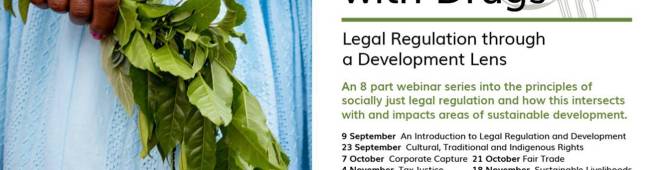
‘A World with Drugs: Legal Regulation through a Development Lens.’

Invitation to webinar series running September~December

We are delighted to be sharing news of an 8-part international webinar series, co-organised by our friends and colleagues at Health Poverty Action. It will explore why drug policy reform is vital for sustainable development.
Drug policy has been undermining progress towards development for decades – it has fuelled violence and conflict, undermined democracy, driven poverty, inequality and poor health, and prevented access to vital medicines worldwide. Furthermore, drug policy reform – especially legal regulation – could significantly contribute to achieving sustainable development if done in the right way

The decades-long ‘War on Drugs’ and its impact on international development has been an issue TPNS has worked on previously, convinced that the evidence points in one direction only: for all the political capital and money thrown at it, it has been an abject failure on just about every count.

This new international webinar series explores the intersection of drug policy reform and development related issues such as trade justice, tax justice, climate justice, sustainable livelihoods and community participation.  Between September and December, the webinar series will look at how drug policy reform is vital if we wish to achieve sustainable development worldwide.
Continue reading

MLK Global’s statement on the killing of George Floyd

MLK Global’s statement on the killing of George Floyd

GEORGE FLOYD

REST IN PEACE

The last words of George Floyd

“I can’t breathe”

It’s my face man.

I didn’t do nothing serious man.

Please. Please. Please. I can’t breathe.

Please man. Please somebody. Please man.

I can’t breathe. I can’t breathe please.

Man I can’t breathe. My face.

Just get up.

I can’t breathe. Please.

I can’t breathe shit.

I will.

I can’t move.

Mama. Mama.

I can’t. My knee. My nuts.

I’m through. I’m through.

I’m claustrophobic. My stomach hurts.

My neck hurts. Everything hurts.

Some water or something. Please. Please.

I can’t breathe officer. Don’t kill me.

They gonna kill me man, come on man.

I cannot breathe. I cannot breathe.

They gonna kill me. They gonna kill me.

I can’t breathe. I can’t breathe.

Please Sir. Please Sir.

Please I can’t breathe!”

George Floyd’s dying words at the hands of police officer Derek Chauvin

Cry for his pain when you read them.
Continue reading

Sharing some more links – film event; Palestine COVID appeal; our future work

Sharing some more links – film event; Palestine COVID appeal; our future work

Dear friends and supporters,

A brief mini-update below on some of the issues we continue to work on with a few links we hope may be of interest.

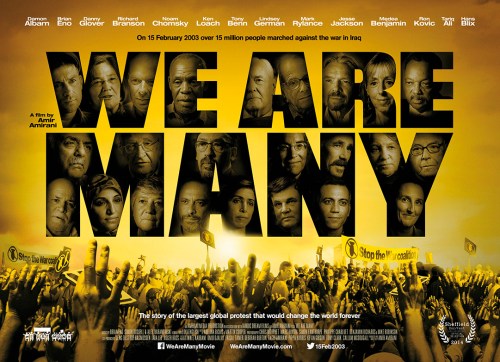
WE ARE MANY FILM April 8th 


We’re excited to share news about Stop the War’s Mass Viewing of We Are Many and Q&A with director Amir Amirani on Wednesday 8 April.Stop the War are giving 5 days to try and watch this acclaimed film about the global anti-Iraq war movement, after which they will host a Q&A with Amir and two special guests, via Zoom.

You can watch the film here:
iTunes – https://itunes.apple.com/gb/movie/we-are-many/id1118498978
Amazon – https://www.amazon.co.uk/We-Are-Many-Damon-Albarn/dp/B01IFW0WX4

Other outlets are also available and if you’ve seen it before or would just like to tune in anyway you can join in on Zoom from 7pm on April 8th. Register here
https://zoom.us/webinar/register/WN_Zv-2463wSxCd77PZ1juvzw
Continue reading

In times of Coronavirus: UBI is an idea whose time has finally come

In times of Coronavirus: UBI is an idea whose time has finally come

The solution to poverty is to abolish it directly by a now widely discussed measure: the guaranteed income. … We are likely to find that the problems of housing and education, instead of preceding the elimination of poverty, will themselves be affected if poverty is first abolished.

Martin Luther King Jr., Where Do We Go From Here: Chaos or Community? (1968)

We hope this email finds you, and all those you care for, safe and well.

Many of us also have family, friends and colleagues in many different parts of the world and, coupled with the ever rising number of cases here in the UK/Europe/USA, the news about the spread of Coronavirus (COVID-19) across the global south, for many of us, will be even more worrying.

It is becoming more apparent with every passing day that the Coronavirus pandemic is holding a mirror up to every single aspect of human life and activity and that this scrutiny leaves much of humanity’s 21st century day to day behaviour sorely wanting. The ultimate damning evidence of this is the millions upon millions of our fellow sisters and brothers in the global south who don’t even have access to the basic protective shield of soap and water as this pandemic rages across the globe.

It’s not as if we didn’t know the system was long broken. We did. The evidence has been piling up for years and years. However, global inequality and the unstoppable ascendency of the tax evading greedy 1%; the harm of agribusiness and factory farming at one end and illegal poaching at the other; big pharma’s monopolies and the erosion of the primacy of publicly funded healthcare and research; and finally, ultimately, climate catastrophe; none of this was enough to force the hands of the political class, financial and corporate sectors to change course and ‘do the right thing’.
Continue reading

Breast Cancer: An Environmental Disease. In celebration of our dear friend and longstanding colleague Diana Ward, on Rachel Carson Day

Breast Cancer: An Environmental Disease. In celebration of our dear friend and longstanding colleague Diana Ward, on Rachel Carson Day

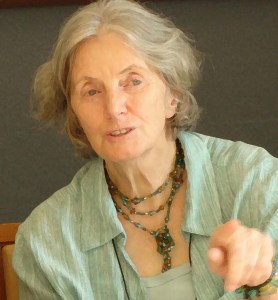
Marking the life and legacy of our dearest friend Diana Ward, on Rachel Carson Day.

Every year, at this time, we at From Pink to Prevention campaign take time to mark the life of the extraordinary, visionary Rachel Carson (May 27, 1907 – April 14, 1964).  Carson wrote and lobbied the USA government about the impact of toxic chemicals on the environment and human health.

This will be the first year we mark Rachel Carson day without our own extraordinary, visionary friend and campaigner, Diana Ward.
Continue reading

From Pink to Prevention October Art Exhibition

From Pink to Prevention October Art Exhibition

An Exhibition of Original Work by Diana Ward, marking Breast Cancer ‘Prevention’ Month launched on Wednesday 17 October.

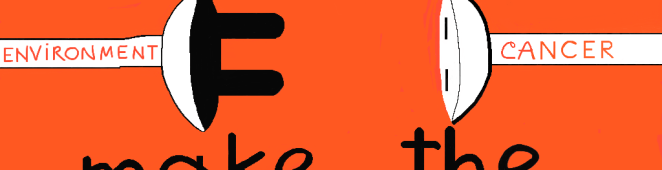
On Wednesday 17 October UNISON hosted with a reception a new exhibition of 23 original cartoon works by From Pink to Prevention co-founder Diana Ward. Diana’s art-work is a unique way into the subject of the politics of breast cancer and it reflects on the decades of scientific evidence linking environmental and occupational risk factors to breast cancer. Continue reading

We Are Many

We Are Many

Amir Amirani’s film We Are Many was in the research and making for more than nine years. Addressing the illegality of the invasion of Iraq and the subsequent undermining of democratic processes, it sets alongside the power of public protest and mass mobilisations of the anti-Iraq war movement – a movement that was to inspire the Egyptian uprising of 2011; a movement of more than 15 million people, in 800 cities, in 70 countries who marched to protest the imminent invasion of Iraq; a movement which shaped a generation.

Tipping Point Film Fund was the film’s first funder in late 2010 and was an executive producing partner throughout. It was a lead partner on a Kick-starter campaign that raised $92k for the production costs and worked with Amir across fundraising, production, editing, and release in UK cinemas in 2016, as well as the film’s outreach on related peace issues.  Find out more here.

WE ARE MANY is available on iTunes and Google Play.

Continue reading

As the NHS turns 70, let’s make it our major export

‘As we celebrate the NHS here, we must not underestimate its symbolism beyond our borders. As the People’s Health Movement, the global network of health activists, made clear in evidence to my recent consultation, the health service does not just impact on the lives of people in the UK. It is a beacon of hope to millions of people around the world who are fighting for their own access to healthcare. Its very existence demonstrates that universal, publicly funded healthcare is possible.

This was always its intention. As Nye Bevan said on the day the NHS was brought into existence: “The eyes of the world are turning to Great Britain. We now have the moral leadership of the world.” Continue reading

Meet the Economist Behind the One Percent’s Stealth Takeover of America

By Lynn Parramore, Senior Research Analyst, Institute for New Economic Thinking. Originally published at the Institute for New Economic Thinking website

Nobel laureate James Buchanan is the intellectual lynchpin of the Koch-funded attack on democratic institutions, argues Duke historian Nancy MacLean

Ask people to name the key minds that have shaped America’s burst of radical right-wing attacks on working conditions, consumer rights and public services, and they will typically mention figures like free market-champion Milton Friedman, libertarian guru Ayn Rand, and laissez-faire economists Friedrich Hayek and Ludwig von Mises.

James McGill Buchanan is a name you will rarely hear unless you’ve taken several classes in economics. And if the Tennessee-born Nobel laureate were alive today, it would suit him just fine that most well-informed journalists, liberal politicians, and even many economics students have little understanding of his work.

The reason? Duke historian Nancy MacLean contends that his philosophy is so stark that even young libertarian acolytes are only introduced to it after they have accepted the relatively sunny perspective of Ayn Rand. (Yes, you read that correctly). If Americans really knew what Buchanan thought and promoted, and how destructively his vision is manifesting under their noses, it would dawn on them how close the country is to a transformation most would not even want to imagine, much less accept.

That is a dangerous blind spot, MacLean argues in a meticulously researched book, Democracy in Chains, a finalist for the National Book Award in Nonfiction. While Americans grapple with Donald Trump’s chaotic presidency, we may be missing the key to changes that are taking place far beyond the level of mere politics. Once these changes are locked into place, there may be no going back.
Continue reading

Cannabis: Regulate it. Tax it. Support the NHS. Promote public health.

A new report by Health Poverty Action.

The so-called ‘war on drugs’ was always built on shaky foundations. Now countries and jurisdictions around the world are dismantling it piece by piece and building a new, 21st century approach to drugs that puts public health first.

Read the report

Nowhere are the foundations of this new approach to drugs more obvious than in the global movement towards regulated, legalised cannabis markets. And despite the US being the ostensible leader of the ‘war on drugs’, it has been US states at the forefront of this move. The results from the US so far are generally positive: confounding critics whilst bringing in additional tax income to fund public services.[1] And this is just the start: in the summer of 2018 Canada will become the first G7 country to legalise cannabis.

Regulating and legalising cannabis is an idea whose time has come.

Sign the petition

It is time to accept that prohibition is not only ineffective and expensive, but that regulation could – if it is done well – protect vulnerable groups and support public health. It would also generate both taxes (at least £1 billion annually, but potentially more) and savings, which taken together would mean more resources for health, harm reduction and other public services.

It is time for the UK government to catch up with the global shift and take the responsible approach by bringing in a regulated, legal market for cannabis.

To do this the UK government should

  • move primary responsibility for cannabis policy and all other domestic (legal and illegal) drug policy to the Departments of Health (DH) and International Development (DFID)[2];
  • bring together a panel of experts to develop the most effective model for a regulated market; and,
  • establish a Cannabis Regulatory Authority to implement their recommendations.

It is time to act.

Read the full report here:

[1] Transform, (2015) ‘Cannabis regulation in Colorado: early evidence defies the critics’ Available online: www.tdpf.org.uk/blog/cannabis-regulation-colorado-early-evidence-defies-critics

[2] Health Poverty Action (2018) ‘Building a 21st Century Approach to Drugs’ Available online: https://www.healthpovertyaction.org/wp/wp-content/uploads/2018/01/Building-a-21st-century-approach-to-drugs_briefing2018.pdf

Media Coverage

Print/online

https://www.theguardian.com/society/2018/jun/02/legalise-cannabis-treasury-3bn-drugs

https://www.independent.co.uk/news/uk/home-news/legalising-cannabis-fund-nhs-budget-weed-health-poverty-action-a8381166.html

Making cannabis legal ‘could bring £3,500,000,000 to the UK’

https://www.dailystar.co.uk/news/latest-news/707069/Legalise-cannabis-free-the-weed-NHS-budget-taxes-referendum-Home-Office-Health-Poverty-Act

http://uk.businessinsider.com/a-legal-cannabis-market-could-offset-nhs-deficit-2018-6

Broadcast

https://www.bbc.co.uk/programmes/b0b4yzrm from 46:50

Opinion

https://www.theguardian.com/society/2018/jun/02/why-we-must-legalise-cannabis-public-health

How legalising cannabis could save the NHS

#MLKGlobal launched on MLK Day!

#MLKGlobal launched on MLK Day!

“Injustice anywhere is a threat to justice everywhere. We are caught in an inescapable network of mutuality, tied in a single garment of destiny. Whatever affects one directly, affects all indirectly” Rev Martin Luther King Jnr (1963)

On January 15th 2018, MLK Day, we  launched our new MLK Global website and statement calling for action on an end to poverty, racism and militarism in our lifetime. We do this in the lead up to the 50th anniversary of the murder of Martin Luther King Jr.

Dr. King’s structural analysis of race, economy and war & his solutions were way ahead of his time and remain a correct analysis of our world in 2018. The same ‘Triple Evils’ he talked of in 1967/68 are still interconnected today, only now they are global: $2trillion global military spend; greater levels global inequality; racism and far-right rising. MLK Global says we need global civil society to unite again around Dr. King’s call for an end to racism, poverty & militarism in our lifetime. https://mlkglobal.org/…/an-end-to-poverty-racism-militarism/

MLK Global believes that Dr. King’s analysis of the underlying structures that reinforce inequality speaks to peoples across the global north & south who share a deep desire for long-overdue change. MLK Global wants to see a renewed awareness of his 5-point Economic Bill of Rights, re-envisioned for today. Economic inequalities, racism, militarism & climate change are destroying families, communities, nations and the very planet we live on. The time to fulfil Dr. King’s vision of a “radical redistribution of power” is now. https://mlkglobal.org/…/dr-kings-econ-bill-of-rights-reviv…/

You can read more about the background to our statement https://mlkglobal.org/background-to-mlk-global-statement/

and find the Statement and Endorsees here https://mlkglobal.org/mlk-global-statement/.

These are revolutionary times. All over the globe men are revolting against old systems of exploitation and oppression, and out of the wounds of a frail world, new systems of justice and equality are being born. The shirtless and barefoot people of the land are rising up as never before. The people who sat in darkness have seen a great light. We in the West must support these revolutions.

Our only hope today lies in our ability to recapture the revolutionary spirit and go out into a sometimes hostile world declaring eternal hostility to poverty, racism, and militarism.

A genuine revolution of values means in the final analysis that our loyalties must become ecumenical rather than sectional. Every nation must now develop an overriding loyalty to mankind as a whole in order to preserve the best in their individual societies.

This call for a worldwide fellowship that lifts neighborly concern beyond one’s tribe, race, class, and nation is in reality a call for an all-embracing and unconditional love for all mankind.

4 April 1967, Riverside Church, Beyond Vietnam speech

Follow us

Website

Facebook 

Twitter

Xmas Greetings! Our 2017 Highlights

Xmas Greetings! Our 2017 Highlights

Dear friends, supporters and colleagues,

An end of year  round-up is always interesting – a mixed sense of have made progress yet realising the scale of any given issue is so great that there is always so much further to go..

In 2017, we made progress on existing work and launched some new projects… Below are some links to our 2017 highlights.

Wishing you peace and happiness in 2018.

From everyone at Tipping Point

Continue reading

The World Inequality Report

by Max Lawson, Head of Inequality Policy,  Oxfam International

This week saw the launch of the first ‘World Inequality Report’ written by the team at the Paris School of Economics and based on the data collected by over 100 researchers behind the World Incomes Database.  The summary is very short and full of fantastic charts, well worth taking a look at.  They have pioneered the use of tax data and other sources to recalculate the incomes of those at the top, which are hugely underestimated. They have now done this for enough large countries to make some conclusions about global trends, which is the basis of the report.
Continue reading

£280bn Global Arms Sales in 2016

Global sales of weapons and military services have risen for the first time in five years, helped in part by an increase in sales by British companies.

Weapons – many of which are fuelling deadly conflicts in the Middle East – are now being bought and sold at the highest level since 2010, with sales up more than a third (38 per cent) since 2002.

Military kit worth $374.8bn (£280bn) was sold in 2016 by the industry’s top 100 companies, an annual review by the Stockholm International Peace Research Institute (Sipri) found.

The findings came as UK firm BAE Systems signed a $6.7bn deal with Qatar to buy 24 Typhoon fighter jets.

British arms sales rose 2 per cent last year and now amount to almost 10 per cent of global sales, researchers found.

Germany’s arms sales jumped 6.6 per cent while South Korean companies notched up 20 per cent more sales than a year earlier. …

Sales by Lockheed Martin – the world’s largest arms producer – rose by 10.7 per cent in 2016, the report found, linked to the sale of F-35 combat aircraft. Continue reading

Destruction Of Black Wealth During The Obama Presidency

Between 2007 and 2016, the average wealth of the bottom 99% decreased by $4,500. This decline was particularly
concentrated among the housing wealth of AfricanAmericans. Outside of home equity, black wealth recovered its 2007 level by 2016. But average black home equity was still $16,700 less. Meanwhile, over the same period, the average wealth of the top 1% increased by $4.9 million. Much of this decline in wealth, we argue, was the direct result of policies enacted by President Obama. His housing policies, particularly regarding foreclosures, were a disastrous failure that led to millions of families losing their homes, with black families suffering especially harsh losses. What’s more, Obama had power—money, legislative tools, and legal leverage—that could have very sharply ameliorated the foreclosure crisis, if not largely prevented it. He chose not to use them.

In the following essay, we shall examine the circumstances that led to the housing bubble, and its eventual collapse in Part I. In Part II, we shall take a close statistical look at the decline in black housing wealth. And in Part III, we shall outline an approach that would have halted the foreclosure crisis, had President Obama chosen to pursue it.

Click to access Foreclosed.pdf

Artists’ letter on Trump and Jerusalem

The Guardian reports (10th December) President Macron’s comment that recent US moves on the status of Jerusalem are a threat to peace. They are much more than that.

In recognising Jerusalem as Israel’s capital, Donald Trump seeks to achieve through a declaration what Israel has been trying to do for fifty years through force of arms: to erase Palestinians, as a political and cultural presence, from the life of their own city.

The Palestinian people of Jerusalem are already subject to municipal discrimination at every level, and a creeping process of ethnic cleansing. In addition to the continuing policy of house demolitions, in the last fifteen years, at least thirty-five Palestinian public institutions and NGOs in occupied East Jerusalem have been permanently or temporarily closed by the occupying forces. Cultural institutions have been a particular target.

At the same time Israeli authorities and entrepreneurs have spent millions in clearing Palestinian neighbourhoods to create ‘heritage’ projects that promote a myth of mono-ethnic urban identity, said to stretch back 3000 years.

We reject Trump’s collusion with such racist manipulation, and his disregard for international law. We deplore his readiness to crown the Israeli military conquest of East Jerusalem and his indifference to Palestinian rights.

As artists and as citizens, we challenge the ignorance and inhumanity of these policies, and celebrate the resilience of Palestinians living under occupation.
Continue reading

Jeremy Corbyn’s Geneva speech in full

Speaking at the United Nation’s Geneva headquarters today, Jeremy Corbyn MP, Leader of the Labour Party, said:

Thank you Paul for that introduction. And let me give a special thanks to the United Nations Research Institute for Social Development. Your work gives an important platform to marginalised voices for social justice to challenge policy makers and campaign for change.

I welcome pressure both on my party the British Labour Party and on my leadership to put social justice front and centre stage in everything we do. So thank you for inviting me to speak here in this historic setting at the Palais des Nations in Geneva a city that has been a place of refuge and philosophy since the time of Rousseau. The headquarters before the Second World War of the ill-fated League of Nations, which now houses the United Nations.

It’s a particular privilege to be speaking here because the constitution of our party includes a commitment to support the United Nations. A promise “to secure peace, freedom, democracy, economic security and environmental protection for all”.

I’d also like to thank my fellow panellists, Arancha Gonzalez and Nikhil Seth, and Labour’s Shadow Attorney General, Shami Chakrabarti, who has accompanied me here. She has been a remarkable campaigner and a great asset to the international movement for human rights.

And lastly let me thank you all for being here today.

I would like to use this opportunity in the run- up to International Human Rights Day to focus on the greatest threats to our common humanity. And why states need to throw their weight behind genuine international co-operation and human rights both individual and collective, social and economic, as well as legal and constitutional at home and abroad if we are to meet and overcome those threats.
Continue reading

New report on securitisation of aid

  • Syria case may be ‘tip of the iceberg’ for fund backing some of world’s worst security forces
  • Secretive Conflict, Stability and Security Fund uses £500m of aid money
  • Government accused of using loophole to fund discredited consultancy

The controversial cross-government fund behind the British aid project in Syria which has today been suspended amid claims that money was reaching jihadist groups should be shut down, according to campaign group Global Justice Now, which has released a new report on the fund.

The report lifts the lid on one of the British government’s most secretive funds, which is behind military and security projects in around 70 countries including Bahrain, Egypt, Sudan, Ethiopia, Iraq and Nigeria. The billion-pound pot, known as the Conflict, Stability and Security Fund, spends over £500 million of British aid and is overseen by the National Security Council, chaired by the Prime Minister. Neither the public nor MPs are able to properly scrutinise the fund due to a serious lack of transparency, the report finds.
Continue reading