
Britain is now the second biggest arms dealer in the world, official government figures show – with most of the weapons fuelling deadly conflicts in the Middle East.
Since 2010 Britain has also sold arms to 39 of the 51 countries ranked “not free” on the Freedom House “Freedom in the world” report, and 22 of the 30 countries on the UK Government’s own human rights watch list.
Continue reading
Tag Archives: UK
Real wages in the UK have fallen by more than 10 per cent
| Real wage change (%) | Employment rate change (percentage points) | |
| Greece |
-10.4 |
-9.0 |
| UK |
-10.4 |
0.6 |
| Portugal |
-3.7 |
-5.4 |
| Italy |
0.9 |
-2.3 |
| Czech Rep |
1.1 |
1.0 |
| Ireland |
1.6 |
-7.9 |
| Spain |
2.8 |
-8.5 |
| Netherlands |
3.4 |
-1.7 |
| Denmark |
4.0 |
-3.2 |
| Lithuania |
4.3 |
5.5 |
| Israel |
4.3 |
1.9 |
| Finland |
4.3 |
-3.8 |
| Belgium |
4.4 |
-0.7 |
| Japan |
4.7 |
2.6 |
| Latvia |
4.9 |
-3.0 |
| USA |
6.4 |
-3.4 |
| Austria |
6.5 |
1.2 |
| OECD average |
6.7 |
-0.6 |
| Slovenia |
7.2 |
-4.3 |
| Australia |
7.2 |
-0.7 |
| Hungary |
9.3 |
5.9 |
| Canada |
9.4 |
-1.7 |
| Sweden |
10.1 |
-0.7 |
| France |
10.5 |
-1.8 |
| Luxembourg |
11.1 |
-1.2 |
| Switzerland |
11.3 |
0.5 |
| Slovakia |
12.3 |
0.9 |
| Estonia |
13.4 |
2.2 |
| Germany |
13.9 |
5.1 |
| Poland |
23.0 |
4.5 |
The effects of poverty costs the UK £78bn a year
The Joseph Rowntree Foundation (JRF) estimates that the impact and cost of poverty accounts for £1 in every £5 spent on public services.
The biggest chunk of the £78bn figure comes from treating health conditions associated with poverty, which amounts to £29bn, while the costs for schools and police are also significant. A further £9bn is linked to the cost of benefits and lost tax revenues. …
The JRF report, called “counting the cost of UK poverty”, estimates that 25% of healthcare spending is associated with treating conditions connected to poverty.
Continue reading
Trident
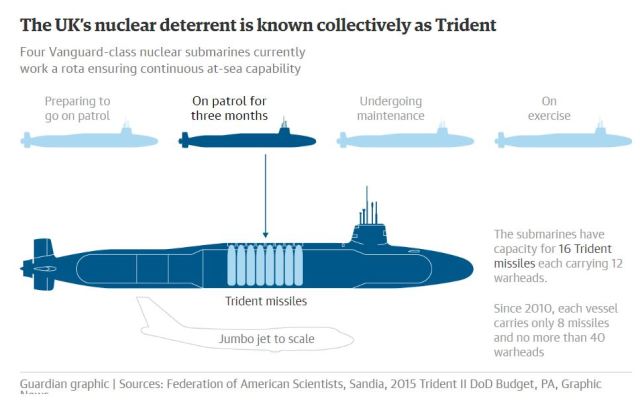
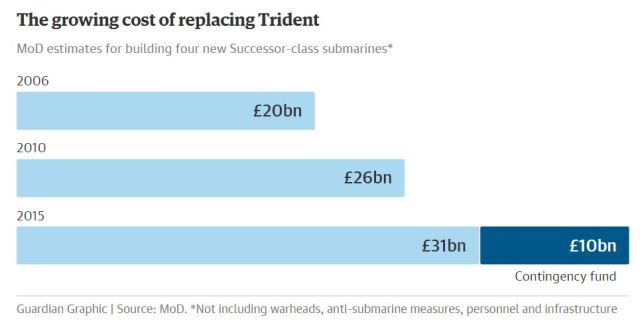
Cripin Blunt on Trident
Cripin Blunt, the Conservative chair of the Commons foreign affairs committee, spoke after Angus Robertson in the debate and he said he would not be voting for Trident renewal.
Earlier, in an intervention, he said that his current estimate was that Trident renewal would have a lifetime cost of £179bn.
- Blunt said Trident renewal would be “the most egregious act of self-harm to our conventional defence”.
Underfunded NHS needed £3 billlion “working capital loans” from government last year
The government had to lend cash-strapped hospitals a record £2.825bn in the last financial year so they could pay staff wages, energy bills and for drugs needed to treat patients.
The Department of Health was forced to provide emergency bailouts on an unprecedented scale to two-thirds of hospital trusts in the 2015-16 financial year because they were set to run out of money, the Guardian can reveal.
Continue reading
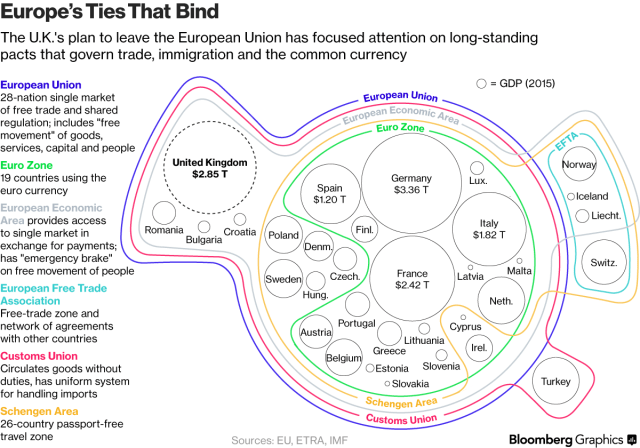
Europe’s political and economic pact
PFI has sucked NHS funding dry
The NHS has more than 100 PFI hospitals. The original cost of these 100 institutions was around £11.5bn. In the end, they will cost the public purse nearly £80bn. The total UK PFI debt is over £300bn for projects worth only £55bn. This means that nearly £250bn will be spent swelling the coffers of PFI groups.
Continue reading
Resolution Foundation: Why did we vote to leave?
There are six key takeaways.
First, living standards matter. Reflecting on the results three weeks ago, we noted that recent changes in living standards hadn’t played much of a role – despite the contention that people were angry about the post-financial crisis squeeze on living standards – but that deeper rooted economic differences did. That finding is confirmed in our more detailed investigation, with employment levels proving the indicator with the strongest link to tendency for an area to vote Leave. A 10 percentage point (ppt) rise in the employment rate within a local authority is associated with a 1.7ppt fall in the leave vote. Areas where high numbers of people are out of work voted to leave.
Continue reading
Labour rebels are destroying their own party
Contempt for Corbyn is rivalled only by disdain for the party that elected him. His critics argue that the membership is unrepresentative of the country as a whole. By definition most political memberships are, but that does not mean they represent nothing. In this case the Labour party membership represents two quite crucial constituencies. First, the group that will help select the Labour MPs and leaders. And second, the group that will knock on doors and staff the phones to fight for a Labour government. Those are no small things.
If Corbyn resigned tomorrow, the issues that he raised would still stand, and the Parliamentary Labour party would still have no coherent response to them. He did not create the dislocation between the PLP and the membership, he merely illustrates it. His critics say they want their party back. Their party may well say it wants Corbyn back. In the absence of any reckoning as to how that discrepancy came about and any idea what to do about it, his critics are going to destroy the party they claim they love to save it from a leader it prefers.
Brexit reading list
‘If you’ve got money, you vote in … if you haven’t got money, you vote out’
Brexit Is Only the Latest Proof of the Insularity and Failure of Western Establishment Institutions
We can’t leave the negotiations with Europe to the Tories
Labour is partly to blame for the racists’ capture of the EU debate
It’s NOT the economy, stupid: Brexit as a story of personal values
The Tory leadership election is a sort of X Factor for choosing the antichrist
John Harris’ Progressive Alliance speech
Why did we vote to leave? What an analysis of place can tell us about Brexit
Right-Sizing The Financial Sector In Post-Brexit Europe
How David Cameron’s Plan To Screw Labour Cost Him The EU Referendum
At which step do you think that this whole ‘Brexit’ farce will collapse?
A response to Paul Mason’s ‘Labour: The Way Ahead’
Labour is stuck but the people who want to leap to a new politics are scattered across the party
Austerity is the cause of our economic woes. It’s nothing to do with the EU
Corbyn is not a “leader”
If nothing else, understanding this makes it much easier to understand the splits in the party after the recent rebellion within the shadow cabinet. Even the language used by each side reflects basically different conceptions of what politics is about. For Corbyn’s opponents, the key word is always “leadership” and the ability of an effective leader to “deliver” certain key constituencies. For Corbyn’s supporters “leadership” in this sense is a profoundly anti-democratic concept. It assumes that the role of a representative is not to represent, not to listen, but to tell people what to do.
Continue reading
Post-Brexit Progressive Alliance
EU citizenship and a “constructive destruction” of the EU
The next European project must make a compelling offer to all European citizens, one that goes beyond nation-state affiliation. It must be based on the principle that all European citizens have political equality: in elections, before the law and in taxes. Cicero called this ius aequum. A government for the people and by the people. A nation state is not the only frame for a democracy. Continue reading
Brexit and inequality

Brexit: ever growing economic inequality and the public spending cuts that accompanied austerity
The outcome of the EU referendum has been unfairly blamed on the working class in the north of England, and even on obesity.7 However, because of differential turnout and the size of the denominator population, most people who voted Leave lived in the south of England.8 Furthermore, of all those who voted for Leave, 59% were in the middle classes (A, B, or C1). The proportion of Leave voters in the lowest two social classes (D and E) was just 24%.8 The Leave voters among the middle class were crucial to the final result because the middle class constituted two thirds of all those who voted. Continue reading
Let’s go out into the country, and reinvent our politics.
But even so, let me make three warnings.
We’ve seen ugly things happening up and down the country, and the license given to horrible, malign forces by the way the Leave campaign conducted itself. Notwithstanding those awful events: please let’s not think of the vast majority of the people I’ve talked about as stupid, or deluded, or bigoted or hateful. I don’t believe 17 million people are like that. In fact, I think I’m confident enough to say I know that.
If you woke up on Friday morning thinking the country was suddenly in the hands of a social tribe you didn’t know much about and you were suddenly terrified about the future, bear in mind: that is how millions of people in this country have been living for decades.
Please understand that the Labour Party has left a vacuum in these places which has been growing for ten or fifteen years. And if the result is denied, certainly while all of this is still raw, Ukip – with or without Nigel Farage, or maybe something even nastier – may well sweep through a lot of England and Wales, and the terrain for meaningful progressive politics will be destroyed. That’s how high the stakes are.
Continue reading
A progressive alliance
As Jeremy Gilbert, one of the crucial thinkers charting a new direction for the British left, points out, by placing general elections in the hands of a few middle-income voters in market towns, our system grants inordinate power to the corporate media, which needs only to influence them to capture the nation. A combination of a media owned by billionaires, unreformed political funding and first-past-the-post elections is lethal to democracy. Continue reading
What Brexit teaches us about communications
- Facts alone are not enough to win the argument
- Relying on expert opinion to build public engagement can sometimes backfire
- Tell a good story
- Identify messages of hope
Why we should back Corbyn
As rallies of support for Jeremy Corbyn are held in Exeter, Plymouth and Penzance this weekend, Simon Parker writes an open letter to the region’s only Labour MP, Ben Bradshaw.
Dear Ben,
I address this to you, but it applies equally to Cimber, Casca, Brutus and the others. Let me say at the outset that I’ve always liked you, always admired your straight talking, your passion, your courage, your genuine interest in the underdog, your honesty. That’s why I find it so difficult to stomach your actions this week. It is with a heavy heart that I feel the need to take issue with our region’s one Labour MP.
I wish you had come out with me on Monday evening. A group of us were gathered in the public hall of a workaday village in South East Cornwall for the regular meeting of Moorland Branch Labour Party. We are a small but growing group, united in our commitment to building a better future for our community, our country and our world. As well as Moorland, there are new and active branches right across my area – Torpoint to Tamar Valley, Lostwithiel to Looe.
Continue reading
 Tipping Point North South