FIRST CONFERENCE ON TRANSITIONING AWAY FROM FOSSIL FUELS
This critically important gathering will serve as a strategic space for dialogue among a broad range of stakeholders, including government representatives, experts, rural and Indigenous Peoples, Afro-descendant communities, civil society, climate advocates, industry leaders, and academia.
TPNS made its submission on the War Machine and Arms Industry as part of the civil society consultation seeking responses to ‘barriers’ and ‘solutions’. Since military spending accelerates climate crisis, TPNS recommends the Santa Marta Conference create a Working Group to investigate routes by which nations can agree on the universal, equitable redirection of military spending to support Global Just Transition Fund
In this research the historic military and conflict-related emissions of the 77 years of Israel’s occupation of Palestinian land since its founding in 1948, culminating in the ongoing genocide of Palestinians for nearly two years is quantified. By applying the monetary measure ‘the social cost of carbon’, that is, the long-term social and environmental damage done by emitting one additional tonne of carbon, the paper calculates the climate reparation owed by Israel to the Palestinian people as a result of these historic military and conflict-related emissions.
KEY FINDINGS
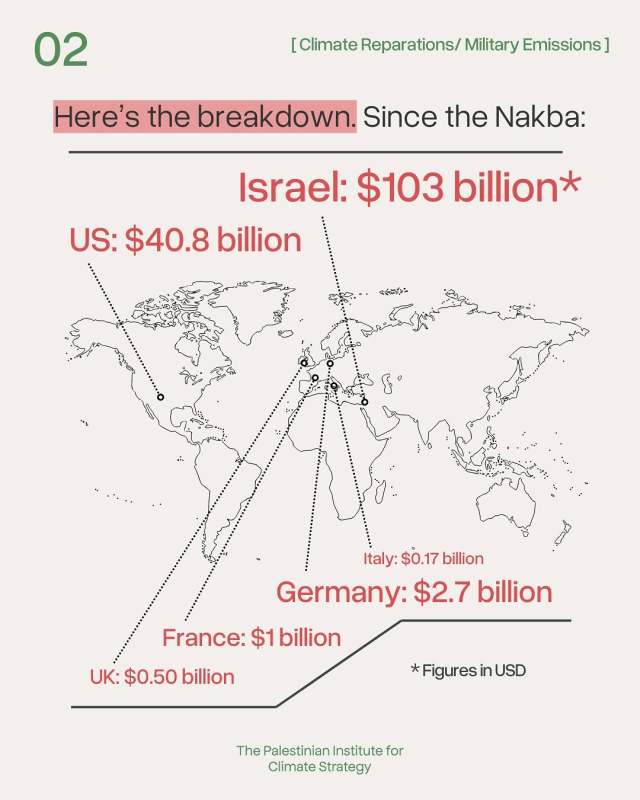
To date, the total estimated amount of the military and conflict-related climate reparations owed by Israel and its allies to the Palestinian people since the Nakba is US$148 billion. Of this,
Israel is responsible for US$103 billion.
The U.S. is responsible for US$40.8 billion.
Israel’s allies share further responsibility: Germany US$2.7 billion, France US$1 billion, the UK US$0.5 billion, and Italy US$0.17 billion.
These figures represent the measurable climate liability of military and conflict-related emissions. Yet, as this briefing makes clear, they capture only one entry point into the broader reparations reckoning for Palestine, which must also encompass the wider harms of occupation, genocide, ecocide and systemic destruction of Palestinian life. Many of these aspects are beyond what we can quantify in simplified carbon metrics, and we must not lose sight of this complexity in rebuilding just futures for Palestine. Continue reading →
As many predicted, on the main issue of climate finance for global south countries, COP29 was indeed the failure many dreaded. Rich nations held to their position that they were unable to reach the public funding levels needed and – as feared – ended up relying on private finance and loans to shore up their paltry and insulting $300bn in order to reach the $1trillion plus annually needed. A far cry from the necessary and just $5tr annually called for by global civil society.
On phasing out fossil fuels, again, the full on commitment that was needed was not to be found. The oil lobby and Saudi Arabia led the charge to row back on Dubai COP28 commitment. This, combined with the finance failure, led to deep disappointment and anger on the part of not just civil society but many regional groupings and governments as well.
However, on the topic of military emissions and – vitally – military spending – it was clear that both are now widely recognised as important elements of the mitigation as well as the climate finance debates. Wider global civil society is now including military spending as part of its overall climate finance demands at COP; a number of states also linked military spending to climate finance.
It was very encouraging to see the relevance of public military spending to the climate finance demands made loud and clear at this COP2 and for TPNS to play its part in this issue ‘breaking out’ inside the official COP space. Deborah Burton attended the first week on behalf of TPNS and her attendance was supported by Movement for the Abolition of War. Continue reading →
To be a true ‘COP of Peace’ Baku needs to acknowledge the ‘hard’ issues that impact on peace, the climate emergency and climate finance.
Both recent civil society Global Weeks of Action (Payup and Phaseout 13-20 Sept) and (Peace and Climate Justice 21-28 Sept) timed to coincide with the UN Summit for the Future and UN General Assembly included urgent calls to address the impact of military emissions and spending on the climate agenda. With COP29 just a month away, we need to look at ‘COP of Peace’ and Azerbaijan’s ‘Joint Solemn Appeal for a COP29 Truce’.
The truce itself is a very timely wish, given relentless Israel’s bombardment of Gaza and now Lebanon, of Russia’s ongoing invasion of Ukraine and the ever-worsening and desperate humanitarian catastrophe in Sudan. The Geneva Academy charts the sorry state we are in: Middle East and North Africa have 45 armed conflicts ongoing; Africa, 35 armed conflicts; Asia 21 armed conflicts; Europe has seven armed conflicts; Latin America: six armed conflicts.
With social media and 24/7 news coverage, it is impossible not to know, not to see, the horrendous impact of war and conflict on men and women; infants and children; the elderly and the disabled.
To add to this, the global military carbon footprint (including its supply chain) is estimated to be around 5.5% of global GHG emissions. This figure does not include conflict emissions or post-conflict reconstruction. Researchers estimate the GHG emissions burden of the Russian invasion of Ukraine is currently estimated to be 175 million tCO2e. Latest research on Israel’s war on Gaza estimates the emission burden of 60 million tCO2e. As a result, since COP27 in Egypt, conflict-related GHG emissions have been included in the official COP programme and are now being referenced in negotiations.
This COP28 was the one that finally recognised fossil fuels as the primary culprit in the climate crisis. But it held back from calling for a phase-out, and instead called for a “transition away”. Not enough since the consensus at COP was this: we are headed for 2° Celsius or more of warming by 2100.
On climate finance the Loss and Damage fund was officially made operational, with $700m committed at COP28. The Green Climate Fund (GCF) received a boost to its second replenishment with six countries pledging new funding at COP28 with total pledges now standing at a record USD 12.8 billion from 31 countries, with further contributions expected. Eight donor governments announced new commitments to the Least Developed Countries Fund and Special Climate Change Fund totalling more than USD 174 million to date, while new pledges, totalling nearly USD 188 million so far, were made to the Adaptation Fund at COP28.
But these new climate finance numbers still pale into insignificance when compared to the $13trillion the big fossil fuel reliant militaries will receive between now and 2030 – the year when we must also hit 45% cuts to global annual GHG emissions.
As Russia’s invasion of Ukraine brought attention to this issue at COP27 in Egypt, so Israel’s bombardment of Gaza meant our message was loudly heard at COP28. The excessively funded fossil-fuel-reliant big militaries of the world – and the arms industry that supply them – are now in the climate change frame for all to see. As a result, COP28 saw the climate justice movement begin to include this issue in their broader analysis.
TPNS took its message to civil society, country delegates, UN departments and media. We built on our presence at COP27 as part of an ever growing civil society movement calling for this issue to be centre-stage. We look forward to building on both existing and new connections in our work to get military emissions and spending on the UNFCCC and climate finance agendas respectively.
We are indebted to the following for their support of our COP28 attendance: Jam Today, Movement for the Abolition of War, Quaker UN Office, Perspectives Climate Group.
Meantime, as the holiday season nears, we send you the very best Season’s Greetings and wish everyone a peaceful Christmas.
“It is unacceptable that the promise of 100 billion dollars a year made by the developed countries will not come to fruition while, in 2021 alone, military spending reached 2 trillion and 200 billion dollars.“
“At the same time, it is important to point out that the world’s militaries contribute at least 5.5% of global emissions and reporting is voluntary and mostly lacking. We ask leaders to reduce and re-allocate military spending to reduce emissions and to provide adequate, scaled-up finance as this is a critical enabler of ambitious climate action.”
Mohamed Adow, director of Power Shift Africa, a Nairobi-based climate and energy think-tank.
“The war on Gaza is also affecting how much funding can be diverted to climate initiatives. Adow says wars and conflict are using up much needed climate cash that could have otherwise been very useful to help protect vulnerable communities from climate disaster. He used the example of Ukraine, where he says trillions of dollars were sent at a time that the international community was struggling to mobilize a hundred billion for climate finance.“Demilitarization across the world must be a key component of climate justice,” Adow said.“
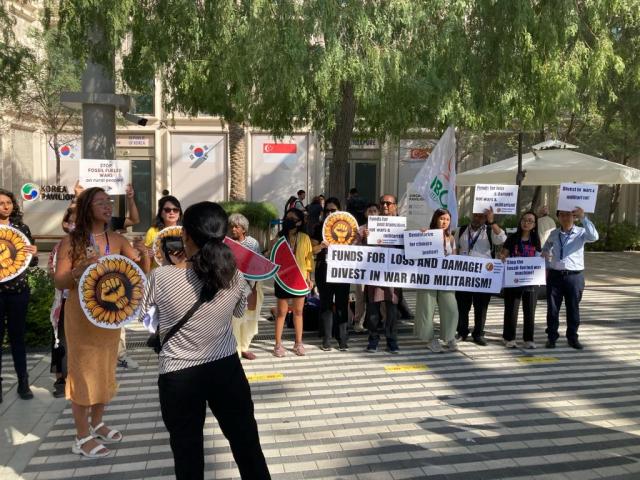
Mitzi Jonelle Tan Convenor and international spokesperson of Youth Advocates for Climate Action Philippines (YACAP), the Fridays For Future (FFF) of the Philippines. Mitzi has long pushed for the climate movement to address militarism. She co-ordinated this action at COP28 before heading over to join our 4 December official side event.
“Don’t tell me that there are no resources. If we took 5 per cent of military expenditures and move them towards a education and to address climate crisis… We would have $100 billion a year to address climate change. So, the message is that you need to start reprioritizing.”
COP28 – OUTCOMES
Below are links to various commentaries on COP28 conclusion.
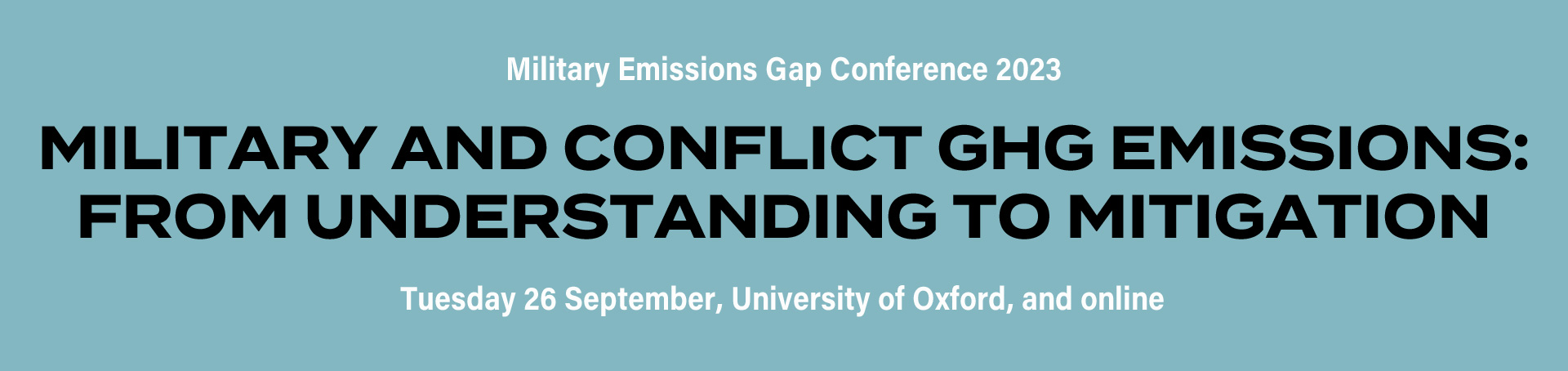
Along with our June 2022 Report calls for an IPCC Special Report on the role of the military in climate change and inclusion of military emissions full reporting to the Global Stocktake, we called for an academic conference that could begin to draw existing and new research together which could advance our IPCC call.
We are delighted that a number of academic institutions have come together to deliver the first such event at the King’s Centre in Oxford. Our colleague Axel Michaelowa from Perspectives Climate Group will make his presentation on a panel alongside Prof Neta Crawford and Dr Stuart Parkinson, Scientists for Global Responsibility. Continue reading →
We are delighted to be included in the inaugural volume of Degrowth Journal organised asa free, open-access, international, trans-disciplinary, and peer-reviewed journal that focuses on advancing the goals of degrowth. Our article wanted to draw largely unaddressed connections between degrowth and the global military. Continue reading →
Our session was entitled ‘Closing the Global Stocktake’s military emissions gap’. Deborah Burton’s contribution focussed on the positive correlation between military spending and military emissions. The room was fairly full and excellent feedback received after the event – mainly ‘we didn’t know this issue was so big and so off radar’. Many follow-up conversations took place during the remainder of the conference addressing both emissions and military spending
The side event built on our submission to the Global Stocktake, signed by Conflict and Environment Observatory, Concrete Impacts, Costs of War Project, Norwegian People’s Aid, Scientists for Global Responsibility, Women’s International League for Peace and Freedom, Zoï Environment Network, and Tipping Point North South. A poster was produced for the GST TD poster session to accompany this submission. Continue reading →
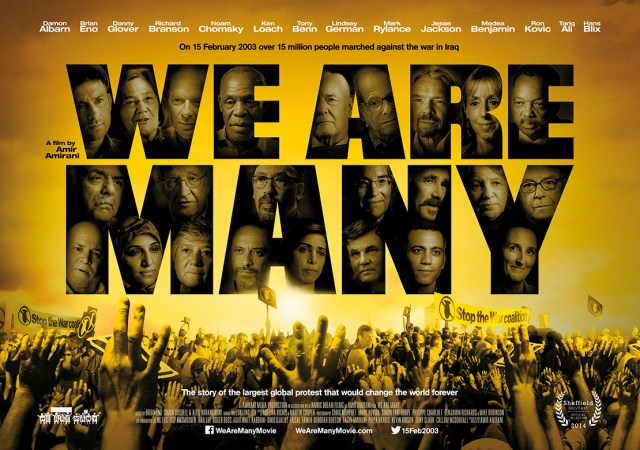
It hardly seems possible but it is 20 years since the world mobilised to speak out and tell their governments ‘Not in Our Name’ – no invasion of Iraq. Marches took place on every continent, including Antarctica.
Did it stop the war? No. Were the arguments made by those against the invasion proven right? Yes. Deborah Burton and Ho-Chih Lin have co-written a blog with Amir Amirani, director of We Are Many to mark this 20th anniversary. One of the core messages of the film – foreign and defence policy-making built upon lies and misinformation can only lead to long term often catastrophic consequences – now remains at the heart of our Transform Defence project.
Reflecting on 20 years since the global anti-Iraq war marches and the invasion that followed
In the nine years of the Iraq War, according to the Costs of Wars Project, around 300,000 people (including civilians) were killed directly and many more killed indirectly. The invasion of Iraq by the United States-led coalition was estimated to have released around 250 million tCO2e. Despite this enormous climate impact, there is a shocking lack of transparency and accountability to the UNFCCC for this particular sector. Ever rising military budgets fund the big GHG emitting hardware. The richest countries are spending 30 times as much on their armed forces as they spend on providing climate finance for the world’s most vulnerable countries
TALK: Military Emissions, Military Spending and Climate Change, Drexel University USA
Post COP27 Deborah was invited to give a webinar as part of a series for Drexel University’s Green Infrastructure, Climate and Cities programme followed by a panel discussion with Prof Franco Montalto and Kristy Kelly PhD, a specialist in gender and development.
Watch the talk here.
Also delighted to have joined CODEPINK in the USA for a webinar on unpacking COP27 – the highs and the lows; what was achieved for the issue of military emissions and spending; and what we might expect from COP28 in Dubai.
FILM: MLK Global
MLK Day 16 January: To mark MLK Day our MLK Global team – Yolande Cadore in NYC, Dionne Gravesande and Deborah Burton – wrote this piece.
March 29th: We look forward to returning to Union Chapel in Islington, north London, for another screening of the outstanding film: From Montgomery to Memphis. Check Union Chapel website for more information nearer the date.
UN SUBMISSION: Missing Military Emissions
The Global Stocktake is a new UNFCCC process to gather information on GHG emissions with the results to be presented at COP28 this year in Dubai. The stocktake enables the assessment of global collective progress on mitigation, adaptation, means of implementation and support.
Critically, the process needs information about what is not being ‘counted’ and unreported military emissions are just that. We are working to get military emissions on the Global Stocktake and with seven other research and advocacy groups (Europe & USA) we have just made a joint submission based on the recommendations of our June 2022 report on military emissions reporting to the UNFCCC.
The Global Stocktake is a new UNFCCC process to gather information on GHG emissions. With seven other research and advocacy groups (Europe & USA), TPNS has made a joint submission for military emissions.
Reflecting on twenty years since the historic global anti-Iraq war marches.
Amir Amirani, director of We Are Many , Deborah Burton & Ho-Chih Lin
This 15 February 2023 marks the 20th anniversary of the unprecedented global anti-war protest against the US-led coalition invasion of Iraq. The story of this amazing day was retold in Amir Amirani’s highly acclaimed cinema documentary ‘We Are Many’ released in 2015 and a film for which Tipping Point North South was proud to have been an early funder through its Film Fund. We Are Many was an important film in many ways, not least in how it made clear the disastrous (and deceitful) USA and UK foreign policy decisions that have led to more than two decades of conflict in the region. And the film also makes clear how the war in Iraq was founded upon a lie – the lie that the US political class told their citizens: that Saddam Hussein was implicated in 9/11. He was not. As British journalist Peter Oborne says in the film, it was clear that those calling for no war in the UK (the peace movement and others) knew more than the foreign office and civil service, since those anti-war voices were utterly vindicated as the war took its toll.
Summary:
In the nine years of the Iraq War, according to the Costs of Wars Project, around 300,000 people (including civilians) were killed directly and many more killed indirectly.
The invasion of Iraq by the United States-led coalition was estimated to have released around 250 million tCO2e.
At COP27 in Sharm El-Sheikh it was revealed how significant military emissions in peacetime and war were, estimated to be 5% of global GHG emissions.
Despite this enormous climate impact, there is a shocking lack of transparency and accountability to the UNFCCC for this particular sector.
Ever rising military budgets fund the big GHG emitting hardware. The richest countries are spending 30 times as much on their armed forces as they spend on providing climate finance for the world’s most vulnerable countries.
IRAQ: THE CLIMATE IMPACTS OF WAR
The terrible and enormous human, economic and societal costs of the Iraq war and the conflicts that followed have combined to leave a scar on our global collective conscience. Yet those lessons have not been learned.
The global War on Terror is still ongoing, albeit to a much lesser degree since the end of the conflicts in both Afghanistan and Iraq and, as of February 2022, we saw the invasion of another sovereign country by a military superpower, namely the Russian invasion of Ukraine. Once again, the media has been broadcasting images and footage of the catastrophic toll on innocent children, women and men.
And the coverage of Ukraine has also been revealing something else – the toll on the environment, on our climate and in a way the Iraq war never did.
In the nine years of the Iraq War, according to the Costs of Wars Project, around 300,000 people (including civilians) were killed directly and many more killed indirectly. If all the wars in the US-led global War on Terror were considered, the total direct casualties would be estimated to be nearly 1 million and total US war spending between 2001 -2022, $8 trillion.
But there was one ‘cost’ that had neglected and it was the climate cost because military greenhouse gas emissions in war – at that time – was generally absent from both media coverage and climate policy-making.
The invasion of Iraq by the United States-led coalition was estimated to have released around 250 million tCO2e. Professor Neta Crawford estimates accumulated emissions of the USA military at 1.3 billion metric tonnes of CO2 equivalent for the war-intensive period 2001-2018, with war-related activities in Iraq, Afghanistan, Pakistan, and Syria responsible for 440 million tCO2e between 2001 and 2018.
The destruction during wars of natural or man-made carbon stocks such as forests, energy infrastructure and oil wells can also reach hundreds of millions tCO2e. The burning and reconstruction of cities during and after a country-wide conflict can readily release emissions on a similar scale.
And for Iraq you could read Afghanistan, Yemen, Libya, Syria, Palestine, Ukraine. The list is endless. We have no idea of the cumulative GHG emissions impact of these 21st century wars, let alone what went before in the wars of the 20th century.
UKRAINE: CLIMATE IMPACT OF WAR NOW ON THE AGENDA
Fast forward to 2022 and COP27 Sharm El-Sheikh where an official Blue Zone side event entitled ‘Dealing with military and conflict-related emissions under the UNFCCC’ was hosted by the Ukraine government and CAFOD, making a welcome change on this otherwise hidden issue.
The event had been the result of conversations developed as a result of Tipping Point North South’s June 2022 report by Axel Michaelowa et al., ‘Military and Conflict-Related Emissions: Kyoto to Glasgow and Beyond’ and presented at the COP27 event alongside a groundbreaking report by the Ukraine government ‘Climate damage caused by Russia’s war in Ukraine’. In producing the first country accounting of GHG emissions in conflict, the Ukraine report inevitably showed how much information is missing from other conflicts, past and present. It also highlighted another truth: there has not been anywhere near the same level of military emissions detail on Iraq or Syria or other conflicts. The Ukraine report also proved that if governments want to, and vitally, have the capacity to calculate emissions from war, it can be done.
At Sharm El-Sheikh it revealed just how significant military emissions are in peacetime and war. Along with the supply chain – the makers of the jets, warships, missiles, bombs and bullets – and based on partial and patchy data (because reporting is voluntary) it’s estimated at 5.5% of global GHG emissions. Some 2,750 tCO2e estimated for the carbon footprint of the world’s militaries and associated military technology industry makes it comparable to the combined emissions of civilian aviation (2%) and civilian shipping (3%) sectors.
Notably, this figure does not yet include conflict-related sources, including emissions from infrastructure or landscape fires, the degradation of carbon sinks, post-conflict reconstruction and healthcare for victims. Yet given this enormous climate impact, there is a shocking lack of transparency and accountability for this particular sector.
Just the first seven months of Russia’s invasion of Ukraine has been estimated to be responsible for at least 100 million tCO2e. For comparison, Ukraine’s total CO2 emissions in 2021 (prior to the invasion in 2022) was 185 million tonnes. Conflict-related emissions are substantial, even before we take account of the human suffering and the long-term environmental degradation and pollution.
INDIVISIBLE: MILITARY EMISSIONS AND MILITARY SPENDING
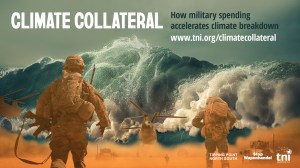
And the other side of the coin is this: ever rising military budgets fund the big GHG emitting hardware. Tipping Point North South took a second report to COP27 – ‘Climate Collateral: How military spending is accelerating climate breakdown’ where we joined with the Transnational Institute and Stop Wappenhandel (Netherlands) to connect the dots between military emissions, military spending and climate finance and revealed that the richest countries (categorised as Annex II in the UN climate talks) are spending 30 times as much on their armed forces as they spend on providing climate finance for the world’s most vulnerable countries, which they are legally bound to do. And just one year’s military spending by the top 10 military spenders would pay for promised international climate finance for 15 years (at $100bn a year).
The possibility of keeping global temperature change below 1.5°C is rapidly receding, with global heating on track for the calamitous 3°C. At this late stage, every single effort to reduce emissions matters and this is especially true when it relates to such a major sectoral emitter, and a source – conflicts – whose emissions dynamics have historically been ignored.
To reduce military emissions we have to start by reducing excessive military spending – there is no way round it. Simply put, fossil fuels are the lifeblood of modern militaries, more military spending directly leads to more military emissions. The War on Terror, especially the Iraq War, kick-started the dramatic decades-long growth in military spending, with the United States spending more than the next top 10 military spenders combined. Where the US leads, the rest follow – global military spending is now more than $2 trillion a year, much more than what we spent during the Cold War.
Meantime, Loss and Damage needs major funding commitment and climate finance for developing countries needs to have the $100bn annual commitment made real not least for the peoples of the many post 9/11 conflicts so hard hit by 20 years of conflict, and who themselves now live with the terrible impacts of climate change.
The big military spending nations are not only up to their eyes in that post 9/11 catastrophe, their militaries also contributed to climate change itself as a result of their military activities there. We need look no further for Loss and Damage funding than inside the insane levels of spending on weaponry, all useless in the face of the greatest threat to our collective safety: climate chaos.
Amir Amirani, Producer/Director, We Are Many
Deborah Burton, Tipping Point North South, and Executive Producer, We Are Many
Dr. Ho-Chih Lin, Transform Defence Project, and Associate Producer, We Are Many






 However, on the topic of military emissions and – vitally – military spending – it was clear that both are now widely recognised as important elements of the mitigation as well as the climate finance debates. Wider global civil society is now including military spending as part of its overall climate finance demands at COP; a number of states also linked military spending to climate finance.







 Mitzi has long pushed for the climate movement to address militarism. She co-ordinated this action at COP28 before heading over to join our 4 December official side event.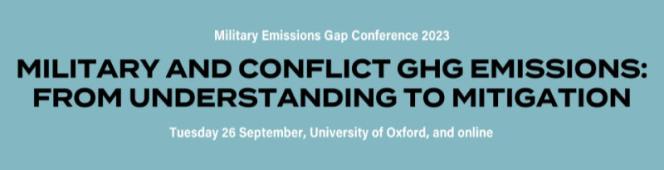








 Tipping Point North South