
This talk was given by John McDonnell on Wednesday 29 June at a Stand Up for Labour event in the George IV pub in Chiswick, West London. The transcript has been lightly edited to account for the difference between spoken and written language but the content is unchanged.
Let me just tell you where we’re at at the moment because it’s important that you know. I just want to go back a short while, I won’t keep you long.
When Jeremy got elected last year he got elected on 59.5% of the vote – the highest mandate that any political leader of this country has ever received from their own membership. It was overwhelming in individual members, the affiliated group and also the new supporters. In every category he won.
When we got back to Parliament he tried, in his own quiet way (I’ve known Jeremy 35/40 years and he’s one of the most caring, compassionate people I’ve met), to work with people, put them together. He created a Shadow Cabinet of left, right and centre, he tried to hold it together. And when he did that he tried to work with the Parliamentary Labour Party all the way through. But there’s been a group within the PLP who consistently refused to accept his democratic mandate and consistently undermined him in every way they possibly could. To be frank, I don’t know how he’s borne it. I’m just so proud of him, to be honest, for what he’s done.
Continue reading
Category Archives: What interests us
UK Child Poverty is getting worse
The number of children living in poverty in the UK has jumped by 200,000 in a year, according to the latest official data.
There were 3.9 million children living in “relative poverty” in 2014-15, up from 3.7 million a year earlier, the figures from the Department for Work and Pensions show.
Continue reading
On Labour Coup, Corbyn, McDonnell
Whoever emerges as Labour’s leader after the dust has settled will be dealing with a country riven by deep inequalities and divisions, and crying out for leadership and a bold vision of how to move on from here. McDonnell’s evolving economic plan has much that Labour should develop, whatever its future leadership, just as McDonnell and his team can themselves be seen as offering not so much a hard break from the Miliband era, but a further development of some of the best ideas, of using forms of predistribution to tackle the root causes of inequality, on which Miliband’s team had worked.
McDonnell has realized that, in the post-crash era of quantitative easing, in which macroeconomic policy is made as much by central banks as by finance ministries, parties of the left can no longer leave monetary policy to the technocrats. His commission examining the workings of the Monetary Policy Committee, chaired by former MPC member Professor David Blanchflower, should be central to Labour’s future economic thinking, and should not be ignored by any post-Corbyn leader. Similarly, McDonnell has asked Professor Prem Sikka to report on the future functioning of HMRC, and Lord Kerslake, a former head of the UK civil service, to report on the functioning of the Treasury, and to investigate the case for its future division into separate ministries of finance and economic development. This fundamental work will allow Labour to think more seriously about the future of a progressive macroeconomic policy.
As well as needing to reach out to the 48% of the population who voted ‘Remain’ and the millions, especially among younger people, who wished they had done so, Labour needs to speak to those who voted for Leave out of a sense of economic desperation. The sense of economic hopelessness that drove voters into the arms of the ‘Leave’ campaign in the northeast, south Wales, parts of Yorkshire and the East of England, and in many coastal towns, can be addressed only by an ambitious return to forms of industrial policy that direct investment towards areas that need to retool their economies. Plans for regional development banks under Miliband have been further developed under McDonnell, with the thinking of his team being much informed by the work of Professor Mariana Mazzucato, and her book on the Entrepreneurial State. Any future Labour strategy for regional economic development must also follow McDonnell in supporting innovative Labour councils, such as Preston City Council, which has looked for ways to develop the local economy through growing the cooperative sector, and using the power of procurement spending by the local authority and other local ‘anchor institutions’ in order to encourage an ecosystem of local enterprises to grow and thrive.
Corbyn was the strongest candidate for the Labour leadership last year, because only his campaign of the four seemed prepared to think at the right scale about the challenges of inequality and economic marginalisation. Throwing out the best and most popular features of Corbyn’s programme now would be self-defeating in the extreme, whoever is to be Labour’s leader into the next election.
Labour After the Earthquake
http://www.versobooks.com/blogs/2730-labour-after-the-earthquake
Corbyn, re-selection
If the Blairites put forward a candidate to oppose him, Corbyn should stand on a policy of mandatory re-selection for all Labour Party MPs. He can position himself as the anti-establishment revolutionary who wants to put an end to career politicians using Labour seats as a lifetime ticket to the Westminster establishment club. Corbyn’s proposition should be that if Labour MPs don’t serve the interests of the people who elected them, the people who elected them can replace them with someone who will.
BREXIT was about Inequality, Austerity, not Immigration
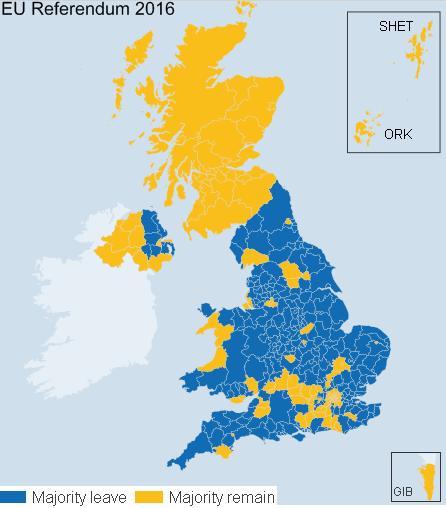


Does Leave vote means Brexit in practice

McCluskey on Corbyn and the coup
It seems clear that this coup would have been launched irrespective of the referendum result. Anyone who thinks remain would have won the vote if Jeremy Corbyn had told traditional Labour areas that all was well with the EU and with globalisation is living in a dream world. It is easier to do that from an oligarch’s yacht or a bank boardroom than it is in our de-industrialised cities and towns.
In fact, Corbyn was honest and straightforward about a complex question. There is no more sense in blaming him than there is in blaming Margaret Hodge for the fact that her constituency was one of the very few in London to vote to leave the EU.
Continue reading
‘If you’ve got money, you vote in … if you haven’t got money, you vote out’
Great piece.
For six years now, often with my colleague John Domokos, I have been travelling around the UK for our video series Anywhere But Westminster, ostensibly covering politics, but really trying to divine the national mood, if such a thing exists. I look back, and find all sorts of auguries of what has just happened. As an early warning, there was the temporary arrival of the British National party in electoral politics from 2006 onwards, playing on mounting popular anger about immigration from the EU “accession states”, in the midst of Gordon Brown’s “flexible” job market, and a mounting housing crisis.
A few years later, we met builders in South Shields who told us that their hourly rate had come down by £3 thanks to new arrivals from eastern Europe; the mother in Stourbridge who wanted a new school for “our kids”; the former docker in Liverpool who looked at rows of empty warehouses and exclaimed, “Where’s the work?”
Continue reading
General Election 2016, Labour, EU
For this to happen three rather difficult but not impossible things have to happen. The first is that the Labour leadership need to stop talking about ‘respecting the will of the people’ and focus on how the Leave side are already owning up to their lies and false promises. The second, and perhaps most difficult, is that Labour need to form a united front on the basis of a Remain ticket, involving the LibDems, Greens and SNP. This is the only way the Conservatives and most of the tabloid press will be defeated. Third, the new Conservative leader has to be forced to hold a general election before Article 50 is invoked.
Continue reading
Don’t leave anyone behind
Since 1976 a lot of Britons who do not live in London (or not the nicer parts) have been doing very badly. The economy is trash if you aren’t connected to the various London money spigots because Britain insisted on de-industrializing.
So, we have a very large number of people who have done very badly for 40 years. They were given an opportunity to vote against the status quo, and they did so.
Now, I am going to tell you a very big secret. It’s a secret that the great sages and the sensible people have been telling humanity for thousands of years.
The secret of living in a good society is leaving no one behind.
Continue reading
Former CIA Officer Amaryllis Fox’s lesson from undercover life
The divided, angry Kingdom
Illegal drug profits, Washington’s foreign military outflows of dollars, and US balance of payments deficit
Hudson’s next task was to estimate the amount of money from crime going into Switzerland’s secret banking system. In this investigation, his last for Chase, Hudson discovered that under US State Department direction Chase and other large banks had established banks in the Caribbean for the purpose of attracting money into dollar holdings from drug dealers in order to support the dollar (by raising the demand for dollars by criminals) in order to balance or offset Washington’s foreign military outflows of dollars. If dollars flowed out of the US, but demand did not rise to absorb the larger supply of dollars, the dollar’s exchange rate would fall, thus threatenting the basis of US power. By providing offshore banks in which criminals could deposit illicit dollars, the US government supported the dollar’s exchange value.
Continue reading
Cerberus and the profits of mass murder
But Cerberus is also very big in guns. It is run by people for whom everything is just business, from firesales to firearms, from Irish property deals to selling weapons of war to anyone who wants them. The connection between Belfastand Orlando reminds us of a truth that is easily forgotten – behind every mass shooting by a deranged psychopath in the US is a very profitable industry owned by Ivy League graduates with clean hands and manicured nails, respectable people who fund politicians in Congress and host charity galas inManhattan. If they had a slogan it would be the old Roman adage, pecunia non olet – money has no smell.
Continue reading
F-18 fighter jet – a “nice margin generator.”
“F-18 has been a great program for this company and continues to be,” CFO Ken Bedingfield told investors this week at Citi’s Industrials Conference in Boston, adding that it’s also a “nice margin generator.”
Continue reading
“Sabre-rattling and war-mongering” was not the way to treat Russia
An extraordinary demarche came at the weekend from the German foreign minister, Frank-Walter Steinmeier. In an interview with Bild am Sonntag newspaper, he accused Nato – an alliance, lest we forget, of which Germany is a member – of “sabre-rattling and war-mongering” by staging military manoeuvres close to Russia’s borders. This, he said, was not the way to treat Russia; it was time to restart dialogue.
Continue reading
Paul Mason on Labour Immigration
Strategically the instinct Corbyn has followed is right: Labour’s new heartland is millions of progressive, liberal minded, globalist people, especially among the young and in the salariat. Forging an alliance between them and the old, manual working class is the challenge — because these are different political “tribes” with sometimes divergent values. But it’s doable, because radicalism on the economy can unite them.
However in the next 10 days we have to change the minds of a much wider group of people, not necessarily Labour voters, who are sick of seeing their own communities blighted and neglected by successive Labour and Tory governments (and councils) alike.
Wrongly they see migration as the main reason. And subtextually they are seeing Brexit as a way of “getting one over” not just on the elite but the liberal middle classes in general. This group does not only include white workers: it includes some black and Asian voters too.
Labour should say:
UBI isn’t really about welfare spending: It’s about tax policy. And it is affordable.
This would be a sound argument if it didn’t miss the point. UBI isn’t really about welfare spending: It’s about tax policy.
UBI is an unconditional cash transfer, which means that you get money from the government to spend however you want. That’s an unusual government spending program. In the US, besides Social Security, the government usually either spends money on a service (like health care or education) or gives conditional cash in the form of things like food stamps.
But the government also spends a lot of money each year on cash transfers through “tax expenditures,” which is the money the government doesn’t collect in taxes because of exclusions in the tax code. Except for the Earned Income Tax Credit, those expenditures almost always help the rich more than the poor. By replacing them with UBI, we would create a more progressive system. That, not the elimination of all government programs, should be the starting place for debates about UBI. Continue reading
Modest but sensible UBI schemes do not make the state any bigger than it already is in most rich countries
The people of Switzerland rejected a proposal for a universal basic income in a referendum last weekend. As Leonid Bershidsky writes, the right conclusion to draw is that the proposal — of paying every citizen a regular amount of money without a work (or any other) requirement — was pitched too high, too soon, and in a place least likely to need it. As he also writes, the wrong conclusion is to bury the idea. …
Claims about the supposed economic unfeasibility of UBI, however, have an unfortunate tendency to intellectual fogginess. …
The relevant reference to the right level of UBI is surely households’ disposable income — the amount they have left on average after taxes and transfers to cover their material standard of living. To be guaranteed 50 per cent of this surely qualifies as reasonable, perhaps too reasonable. But in the UK, for example, “disposable income” (what households have to spend) is less than two-thirds of national income (what the nation has to spend if it does not borrow from other countries). So paying 50 per cent of current disposable income to every citizen would, on its own, cost about 33 per cent of national income. Continue reading
The case for Universal Basic Income
But, after a Conservative government ended the project, in 1979, Mincome was buried. Decades later, Evelyn Forget, an economist at the University of Manitoba, dug up the numbers. And what she found was that life in Dauphin improved markedly. Hospitalization rates fell. More teen-agers stayed in school. And researchers who looked at Mincome’s impact on work rates discovered that they had barely dropped at all. The program had worked about as well as anyone could have hoped.
Mincome was a prototype of an idea that came to the fore in the sixties, and that is now popular again among economists and policy folks: a basic income guarantee. There are many versions of the idea, but the most interesting is what’s called a universal basic income: every year, every adult citizen in the U.S. would receive a stipend—ten thousand dollars is a number often mentioned. (Children would receive a smaller allowance.)
One striking thing about guaranteeing a basic income is that it’s always had support both on the left and on the right—albeit for different reasons. Martin Luther King embraced the idea, but so did the right-wing economist Milton Friedman, while the Nixon Administration even tried to get a basic-income guarantee through Congress. These days, among younger thinkers on the left, the U.B.I. is seen as a means to ending poverty, combatting rising inequality, and liberating workers from the burden of crappy jobs. For thinkers on the right, the U.B.I. seems like a simpler, and more libertarian, alternative to the thicket of anti-poverty and social-welfare programs. Continue reading
 Tipping Point North South