The US Military’s Limited Critique of Itself Ensures Future Disasters

William J Astore, “The US Military’s Limited Critique of Itself Ensures Future Disasters,” The Contrary Perspective, 26 July 2013

In the New York Times on July 20, Major General H.R. McMaster penned a revealing essay on “The Pipe Dream of Easy War.”  McMaster made three points about America’s recent wars and military interventions:

  1. In stressing new technology as being transformative, the American military neglected the political side of war.  They forgot their Clausewitz in a celebration of their own prowess, only to be brought back to earth by messy political dynamics in Afghanistan, Iraq, and elsewhere.
  2. Related to (1), the U.S. military neglected human/cultural aspects of war and therefore misunderstood Iraqi and Afghan culture.  Cultural misunderstandings transformed initial battlefield victories into costly political stalemates.
  3. Related to (1) and (2), war is uncertain and unpredictable.  Enemies can and will adapt. …

Continue reading

Rise of the Warrior Cop

Radley Balko, “Rise of the Warrior Cop,” The Wall Street Journal, July 22, 2013

Since the 1960s, in response to a range of perceived threats, law-enforcement agencies across the U.S., at every level of government, have been blurring the line between police officer and soldier. Driven by martial rhetoric and the availability of military-style equipment—from bayonets and M-16 rifles to armored personnel carriers—American police forces have often adopted a mind-set previously reserved for the battlefield. The war on drugs and, more recently, post-9/11 antiterrorism efforts have created a new figure on the U.S. scene: the warrior cop—armed to the teeth, ready to deal harshly with targeted wrongdoers, and a growing threat to familiar American liberties.
Continue reading

Military Primacy Doesn’t Pay (Nearly As Much As You Think)

Daniel Drezner, Military Primacy Doesn’t Pay (Nearly as Much as You Think), International Security, Vol. 38, No. 1, Summer 2013.

This article evaluates whether the economic benefits of military preeminence and deep engagement are as great as proponents suggest. This evaluation begins by breaking down the arguments that military primacy yields economic returns into the most commonly articulated causal mechanisms. It then assesses what the scholarly literature and evidence can conclude about those causal mechanisms. The three most plausible pathways are the geoeconomic favoritism that foreign capital inflows provide for military super-powers; the geopolitical favoritism gained from an outsized military presence; and the public goods benefits that flow from hegemonic stability.
Continue reading

Drones: CIA didn’t always know who it was killing in drone strikes, and The Pakistan government’s secret document

Richard Engel and Robert Windrem, “CIA didn’t always know who it was killing in drone strikes, classified documents show,” NBC News, 05/06/2013

The CIA did not always know who it was targeting and killing in drone strikes in Pakistan over a 14-month period, an NBC News review of classified intelligence reports shows.

Chris Woods, “Leaked Pakistani report confirms high civilian death toll in CIA drone strikes,” The Bureau of Investigative Journalism, July 22 2013

A secret document obtained by the Bureau reveals for the first time the Pakistan government’s internal assessment of dozens of drone strikes, and shows scores of civilian casualties.

Continue reading

How much military is enough?

Jill Lepore, “The Force,” The New Yorker, January 28 2013

The United States spends more on defense than all the other nations of the world combined. Between 1998 and 2011, military spending doubled, reaching more than seven hundred billion dollars a year—more, in adjusted dollars, than at any time since the Allies were fighting the Axis. …

The long history of military spending in the United States begins with the establishment of the War Department, in 1789. At first, the Secretary of War, a Cabinet member who, from the start, was a civilian, was called the Secretary at War, a holdover from the Revolution but also a prepositional manifestation of an ideological commitment: the department was chiefly to be called upon only if the nation was at war. Early Americans considered a standing army—a permanent army kept even in times of peace—to be a form of tyranny. “What a deformed monster is a standing army in a free nation,” Josiah Quincy, of Boston, wrote in 1774. Instead, they favored militias. About the first thing Henry Knox did when he became George Washington’s War Secretary was to draft a plan for establishing a uniform militia.
Continue reading

Breast cancer awareness is big business

Verónica Bayetti Flores, “Are mainstream breast cancer awareness initiatives hurting more than they’re helping?,” Feministing, April 29 2013

Yesterday the New York Times featured an article in its Sunday magazine about breast cancer, awareness initiatives, and what the real effects these initiatives have had on the lives of women. It’s on the longer side, but one that’s framed around the personal narrative of the author – a breast cancer survivor herself – and well worth a read:

Just about everywhere I go — the supermarket, the dry cleaner, the gym, the gas pump, the movie theater, the airport, the florist, the bank, the mall — I see posters proclaiming that “early detection is the best protection” and “mammograms save lives.” But how many lives, exactly, are being “saved,” under what circumstances and at what cost? Raising the public profile of breast cancer, a disease once spoken of only in whispers, was at one time critically important, as was emphasizing the benefits of screening. But there are unintended consequences to ever-greater “awareness” — and they, too, affect women’s health.

Continue reading

After the War on Drugs: Blueprint for Regulation

After the War on Drugs: Blueprint for Regulation,” Transform Drug Policy Foundation, November 2009

There is a growing recognition around the world that the prohibition of drugs is a counterproductive failure. However, a major barrier to drug law reform has been a widespread fear of the unknown – just what could a post-prohibition regime look like?

For the first time, ‘After the War on Drugs: Blueprint for Regulation’ answers that question by proposing specific models of regulation for each main type and preparation of prohibited drug, coupled with the principles and rationale for doing so.
Continue reading

For a New Approach to Iran

William Luers, Thomas R. Pickering, and Jim Walsh, “For a New Approach to Iran,” The New York Review of Books, August 15, 2013

My administration is now committed to diplomacy…and to pursuing constructive ties among the United States, Iran, and the international community. This process will not be advanced by threats. We seek instead engagement that is honest and grounded in mutual respect.
—President Obama, March 2009

Could this be the year for an engagement with Iran that “is honest and grounded in mutual respect,” as President Obama proposed over four years ago? That goal seems unlikely without a shift in Iranian thinking and without a change in American diplomatic and political strategy. But two developments, one in Iran and one in the region, provide reason to think that diplomatic progress might be possible.
Continue reading

Military spending and the EU crisis

Frank Slijper, “Guns, Debt and Corruption“, Transnational Institute, 14 April 2013

High levels of military spending played a key role in the unfolding economic crisis in Europe and continues to undermine efforts to resolve it.

Download Guns, Debt and Corruption: Full report (pdf, 525KB)
Download Guns, Debt and Corruption: Executive Summary (pdf, 77KB)
Continue reading

The real cost of getting rid of Trident from Scotland: £150m

The real cost of getting rid of Trident from Scotland: £150m“, HeraldScotland, 14 July 2013

Westminster warnings that the bill for ridding an independent Scotland of Trident would run into billions have been undermined by revelations that the UK Government previously put the cost at £150 million.
Continue reading

Transcript of Jimmy Carter’s Speech at Lafayette College

Jimmy Carter, inaugural Robert and Margaret Pastor Lecture in International Affairs, Lafayette College, April 22

What can we do to improve our own lives? Let me go down the list. Let’s talk about peace. That’s one of the major attributes that a human being would have in his life. I would say that the major religions would also have these same kind of things in mind. It doesn’t matter whether you’re a Christian or Jew or a Muslim or Hindu or Buddhist. The major religions advocate peace. They also advocate taking care of the environment. They also advocate helping people who are in need.
Continue reading

The Korean War: Forgotten, Unknown and Unfinished

H Patricia Hynes, “The Korean War: Forgotten, Unknown and Unfinished“, Truthout, 12 July 2013

On Veterans Day 2011, Korean War veteran Jack Tolbert spoke to a gathering at a Northern California cemetery. After relating his memories of serving in the war, among them covering a hand grenade with his lower body to save soldiers under his command, he remarked, “I’ve never understood why they insisted on calling it the Korean Conflict. After seeing the bodies I’ve seen, it was more like a war than anything else I’ve ever seen.”…

Continue reading

U.S. Wastes Millions On Base In Afghanistan It Will Never Use

Hayes Brown, “U.S. Wastes Millions On Base In Afghanistan It Will Never Use“, ThinkProgress, Jul 10 2013

The United States military spent millions of dollars on a shining new command center in the Helmand province of Afghanistan — a center that will never be used and is now likely to be completely demolished.
Continue reading

Press Release: WHO/UNEP strongly endorse need to regulate as endocrine disrupting chemicals (EDCs) identified as ‘global threat’

Press Release, Immediate release, Alliance for Cancer Prevention20/2/13

WHO/UNEP strongly endorse need to regulate as endocrine disrupting chemicals (EDCs) identified as ‘global threat’.

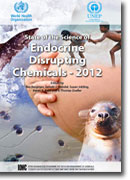
edc_coverA new report from the World Health Organisation (WHO) and United Nations Environment Programme (UNEP) comprehensively reviews the state of the science on endocrine disrupting chemicals (EDCs).  It outlines the very serious and immediate threat to human health and wildlife from EDCs and signals the urgent need for effective regulation and testing of these chemicals.

The report estimates that as much as 24% of human diseases and disorders are due at least in part to environmental factors which include chemical exposures. “Many endocrine diseases and disorders are on the rise and the speed at which they are increasing rules out genetic factors as the sole plausible explanation”.
Continue reading

The British nuclear stockpile, 1953–2013

Robert S. Norris and Hans M. Kristensen, “The British nuclear stockpile, 1953–2013“, Bulletin of the Atomic Scientists, July/August 2013, 69 (4)

Recent research has revealed new facts about the British nuclear arsenal over a 25-year period starting in 1953. This accounting and the authors’ own research support an estimate that the British produced about 1,250 nuclear warheads between 1953 and 2013. From a peak of about 500 warheads in the period between 1974 and 1981, the UK arsenal has now been reduced to some 225 weapons.

Continue reading

Europe’s guns, debt and corruption

Frank Slijper, “Europe’s guns, debt and corruption“, Open Democracy, 27 April 2013

As social infrastructure is being slashed throughout most of Europe, spending on weapon systems has hardly been reduced. Perversely, military lobbyists warn of ‘disaster’ if any further cuts are made to military spending. But the real disaster has emerged from years of high military spending and corrupt arms deals. This second of two essays on military spending and the EU crisis, explores the role of the European arms trade, corruption and the role of arms exporting countries in fuelling a debt crisis, and why these ‘odious’ debts need to be written off.
Continue reading