
Bryan Bender, “From the Pentagon to the private sector,” 26 December 2010, The Boston Globe

Bryan Bender, “From the Pentagon to the private sector,” 26 December 2010, The Boston Globe
Franklin C. Spinney, “The Best Government Money Can Buy,” 11 February 2014, CounterPunch

Winslow T. Wheeler, “America’s $1 Trillion National Security Budget,” 16 March 2014, Truthout
Scarcity of money is not their problem. Pentagon costs, taken together with other known national security expenses for 2015, will exceed $1 trillion. How can that be? The trade press is full of statements about the Pentagon’s $495.6 billion budget and how low that is.
There is much more than $495.6 billion in the budget for the Pentagon, and there are piles of national security spending outside the Pentagon-all of it as elemental for national security as any new aircraft and ships and the morale and well-being of our troops.
Continue reading
Simon Duffy, “Counting the Cuts,” 18 February 2014, Campaign for a Fair Society and The Centre for Welfare Reform

Continue reading
Ben Quinn, “Revealed: the MoD’s secret cyberwarfare programme,” 16 March 2014, Guardian
The Ministry of Defence is developing a secret, multimillion-pound research programme into the future of cyberwarfare, including how emerging technologies such as social media and psychological techniques can be harnessed by the military to influence people’s beliefs.
Continue reading
Annie Isabel Fukushima, Ayano Ginoza, Michiko Hase, Gwyn Kirk, Deborah Lee, Taeva Shefler, “Disaster Militarism: Rethinking US Relief in the Asia-Pacific,” 14 March 2014, The Nation and Foreign Policy In Focus
… Paralleling these disasters has been the disaster response of the US military. According to this “disaster militarism”—which is a pattern of rhetoric, beliefs and practices—the military should be the primary responder to large-scale disasters. Disaster militarism is not only reflected in the deployment of troops but also in media discourse that naturalizes and calls for military action in times of environmental catastrophes.
Continue reading
David Blanchflower, “Bankers don’t deserve their bonuses. They should be taxed and the money used to help our struggling young people,” 16 March 2014, The Independent

Ricardo Fuentes-Nieva, “A Tale of Two Britains: Inequality in the UK,” 17 March 2014, Oxfam GB
Today, the five richest families in the UK are wealthier than the bottom 20 per cent of the entire population. That’s just five households with more money than 12.6 million people – almost the same as the number of people living below the poverty line in the UK.
Continue reading
Stephanie Gaskell, “Pentagon Wants to Keep Controversial War Budget Beyond Afghanistan,” 5 March 2014, Defense One
… But despite the massive drawdown, Pentagon officials want to keep a comparably oversized war chest funded well into next year, quickly raising eyebrows among members of Congress.
The fiscal year 2015 budget calls for $79 billion for Overseas Contingency Operations, or OCO, which funds the war in Afghanistan and other overseas operations. Although the U.S.footprint in Afghanistan has shrunk over the past couple of years, the war budget has stayed robust. This year Congress approved $85 billion for the account.
Continue reading
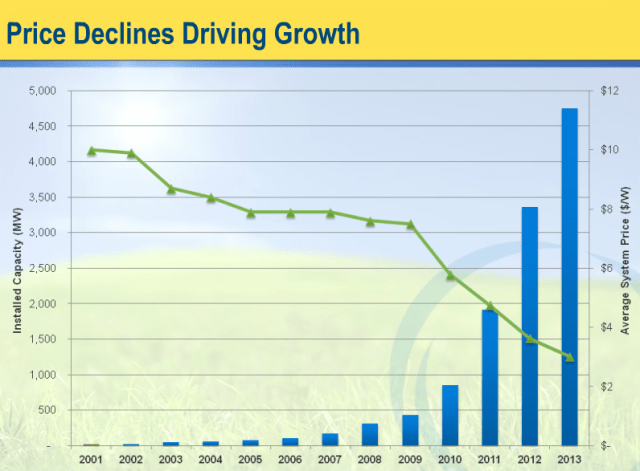
Emily Hois, “More Solar Installed In 18 Months Than Past 30 Years,” 7 March 2014, Clean Energy Collective
Tracy McVeigh, “Inequality ‘costs Britain £39bn a year’,” 16 March 2014, Guardian
The ever-increasing gulf between rich and poor in Britain is costing the economy more than £39bn a year, according to a report by the EqualityTrust thinktank. The effects of inequality can be measured in financial terms through its impact on health, wellbeing and crime rates, according to statisticians at the independent campaign group.
Researchers pointed to the fact that the 100 wealthiest people in the UK have as much money as the poorest 18 million – 30% of all people – and said that the consequences of such unusually high rates of inequality needed to be acknowledged by politicians.
Continue reading
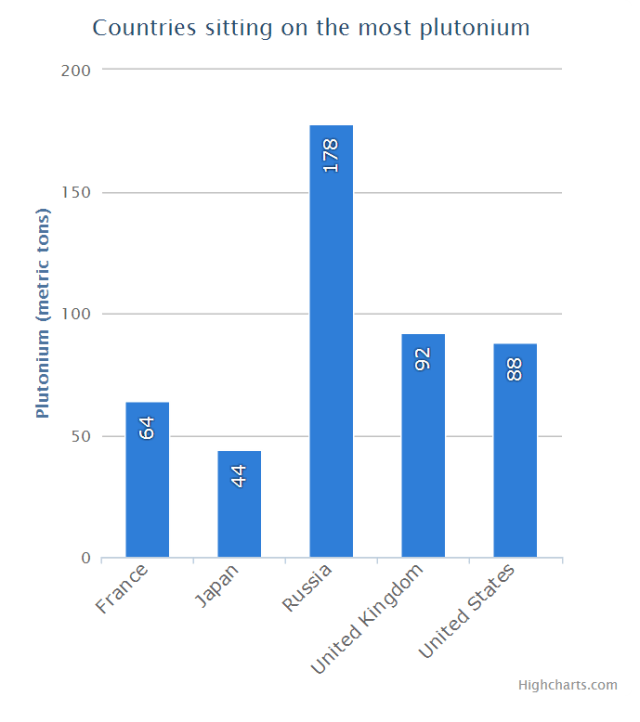
“Japan could be building an irresistible terrorist target, experts say,” 11 March 2014, The Center for Public Integrity
Sanho Tree, “An Inside Look at the Drug War Vs. Civilization,” 5 February 2014, The Fix
We unfortunately live in a society that likes to talk in simple dichotomies—good or bad, yes or no, black or white. It carries over very often into the way we talk about drug policy. Historically, when I would debate drug warriors, because I would be critical of prohibition and the war on drugs, they would say, “Oh, so you want to sell heroin in candy machines to children.” No. I actually want more control over these substances. The myth of prohibition is that prohibition doesn’t mean you control drugs. It means you give up the right to control drugs.
Continue reading
Nafeez Ahmed, “Nasa-funded study: industrial civilisation headed for ‘irreversible collapse’?,” 14 March 2014, Guardian
A new study sponsored by Nasa’s Goddard Space Flight Center has highlighted the prospect that global industrial civilisation could collapse in coming decades due to unsustainable resource exploitation and increasingly unequal wealth distribution.
Continue reading
Nick Turse, “Washington’s Back-to-the-Future Military Policies in Africa,” 13 March 2014, TomDispatch
Since 9/11, the U.S. military has been making inroads in Africa, building alliances, facilities, and a sophisticated logistics network. Despite repeated assurances by U.S. Africa Command (AFRICOM) that military activities on the continent were minuscule, a 2013 investigation by TomDispatch exposed surprisingly large and expanding U.S. operations — including recent military involvement with no fewer than 49 of 54 nations on the continent. Washington’s goal continues to be building these nations into stable partners with robust, capable militaries, as well as creating regional bulwarks favorable to its strategic interests in Africa. Yet over the last years, the results have often confounded the planning — with American operations serving as a catalyst for blowback (to use a term of CIA tradecraft).
Continue reading
Kyle Mizokami, “The Independent Air Force Is a Mistake,” War is Boring
… In Grounded: The Case for Abolishing the United States Air Force, Farley argues that the Air Force is redundant. And, he claims, its existence actually hurts American national security.
Now, Farley doesn’t suggest getting rid of air power. Instead, he recommends the Pentagon dismantle the Air Force and hand its missions—and aircraft—over to the Army and Navy. …
Continue reading
Micah Zenko, “The True Forever War,” 24 January 2014, Foreign Policy
Technology, not policy, will make it easier for U.S. leaders to kill people, blow things up, and disrupt computer networks around the world.
… Many correctly highlight that the AUMF does not reflect the scope of the conflict that the United States is now engaged in, and that its elasticity assures that America will remain on a war footing in perpetuity. However, those concerned with the prospects of a “forever war” should be concerned less about the irrelevant post-9/11 legislative mandate, and more about the revolutionary expansion of military assets that have been made available to the president since then. These technologies and processes that have reduced the costs and risks of using force have permanently changed how Americans conceive of military operations. As killing people, blowing things up, and disrupting computer networks will only get easier, it is worthwhile to take stock of where we are today.
Continue reading
Eduardo Porter, “A Relentless Widening of Disparity in Wealth,” 11 March 2014,

Source: “Capital in the 21st Century,” by Thomas Piketty.
Tom Ackerman, “The Pentagon’s war on words,” 12 March 2014, Al Jazeera English
He calls the treatment of hunger-striking prisoners at Guantanamo “force-feeding”.
But in a just declassified Pentagon document, many of the detainees are described as engaging in “long term non-religious fasting”.
It’s the latest linguistic leavening from the US Department of Defence, a title in itself emblematic of the culture of euphemism at an agency that for 150 years proudly called itself the Department of War. …
Continue reading
 Tipping Point North South